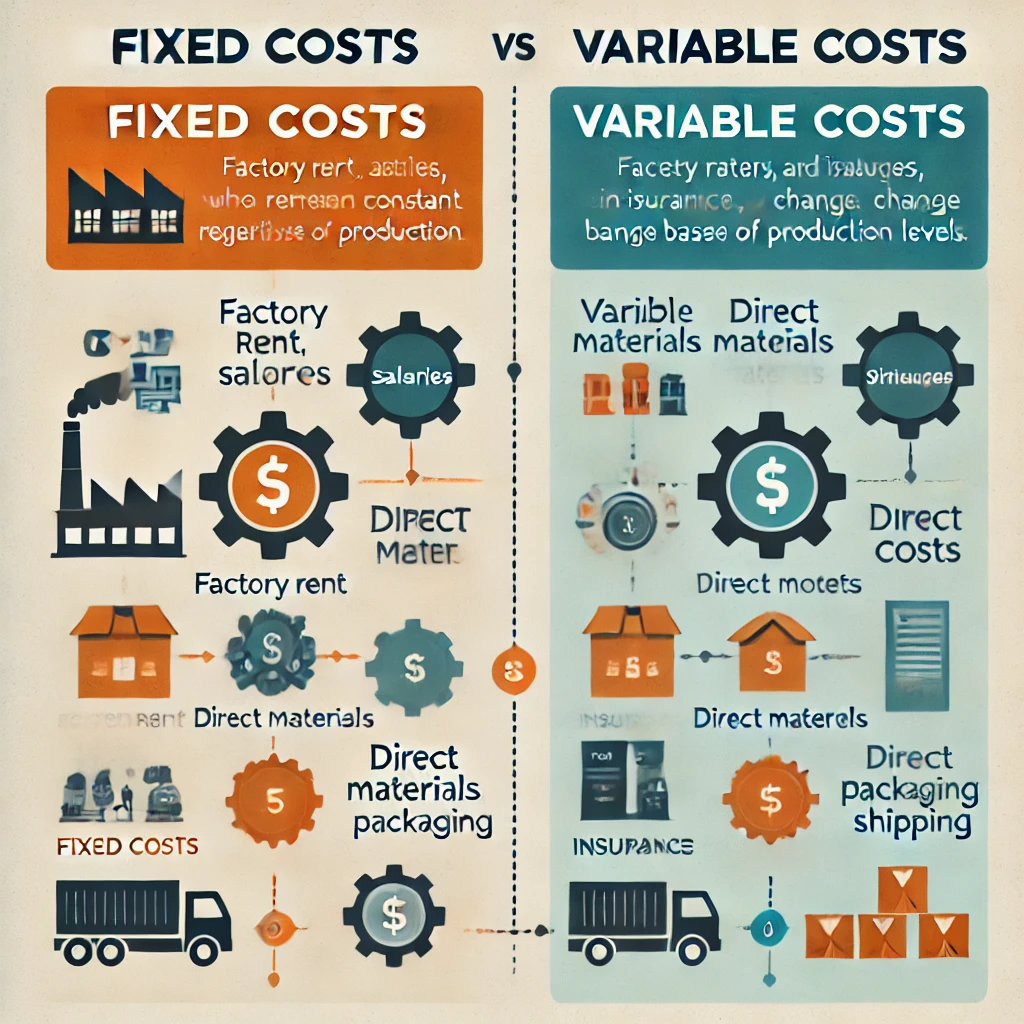
Direct materials cost that varies with the number of units produced is an example of a fixed cost of production.
The correct answer and explanation is :
The statement is incorrect. Direct materials cost that varies with the number of units produced is an example of a variable cost, not a fixed cost.
Explanation:
1. Understanding Fixed and Variable Costs:
- Fixed costs remain constant regardless of production levels within a relevant range. Examples include rent, salaries of permanent employees, insurance, and depreciation. These costs do not change whether a company produces 1 unit or 10,000 units.
- Variable costs change in direct proportion to the number of units produced. Examples include direct materials, direct labor (in some cases), and utilities used in production. If production increases, total variable costs increase; if production decreases, total variable costs decrease.
2. Direct Materials as a Variable Cost:
Direct materials are raw materials that are directly used in manufacturing a product. The cost of direct materials varies based on the number of units produced. For example, if a company produces wooden chairs, the cost of wood increases as more chairs are produced and decreases when fewer chairs are made.
3. Why Direct Materials Are Not Fixed Costs:
Since direct materials cost fluctuates with production levels, it does not fit the definition of a fixed cost. A true fixed cost, such as factory rent, remains the same even if no units are produced. In contrast, if production stops, direct material costs also stop because no raw materials are being used.
Conclusion:
Direct materials cost is a variable cost, not a fixed cost. It increases with higher production and decreases with lower production, making it a key component of cost accounting in manufacturing businesses.