How does Environmental Ethics apply the approaches of Deontological Ethics, Teleological Ethics, and Virtue Ethics to ethical reasoning?
The correct answer and explanation is:
Environmental Ethics and Ethical Approaches
Environmental Ethics applies three major ethical theories—Deontological Ethics, Teleological Ethics, and Virtue Ethics—to evaluate moral responsibilities toward the environment.
- Deontological Ethics (Duty-Based Ethics):
Deontology, associated with Immanuel Kant, emphasizes moral duties and obligations rather than consequences. In Environmental Ethics, deontological reasoning argues that humans have a duty to respect nature and uphold principles such as environmental sustainability and animal rights. Actions like pollution or deforestation are considered morally wrong, regardless of their benefits to economic growth, because they violate duties toward nature and future generations. - Teleological Ethics (Consequence-Based Ethics):
Also known as consequentialism, this approach, particularly utilitarianism (Jeremy Bentham, John Stuart Mill), evaluates the moral worth of actions based on their outcomes. In Environmental Ethics, teleological reasoning supports environmental conservation if it maximizes overall well-being. Policies like renewable energy adoption or conservation efforts are justified because they lead to the greatest long-term benefits for humans and ecosystems. However, some argue that teleological ethics may justify environmental harm if it benefits the majority, making it controversial. - Virtue Ethics (Character-Based Ethics):
Rooted in Aristotle’s philosophy, Virtue Ethics focuses on cultivating moral character traits like humility, responsibility, and respect for nature. A virtuous person sees environmental stewardship as an essential part of a good life, leading to sustainable behaviors like reducing waste, protecting biodiversity, and living in harmony with nature. Unlike deontology and teleology, Virtue Ethics emphasizes the development of an environmentally conscious character rather than rigid rules or consequences.
Conclusion
Each ethical theory provides a unique perspective on environmental responsibility. Deontology focuses on moral duty, teleology emphasizes beneficial consequences, and virtue ethics nurtures ethical character. Together, these approaches guide individuals and societies toward sustainable and ethical environmental practices.
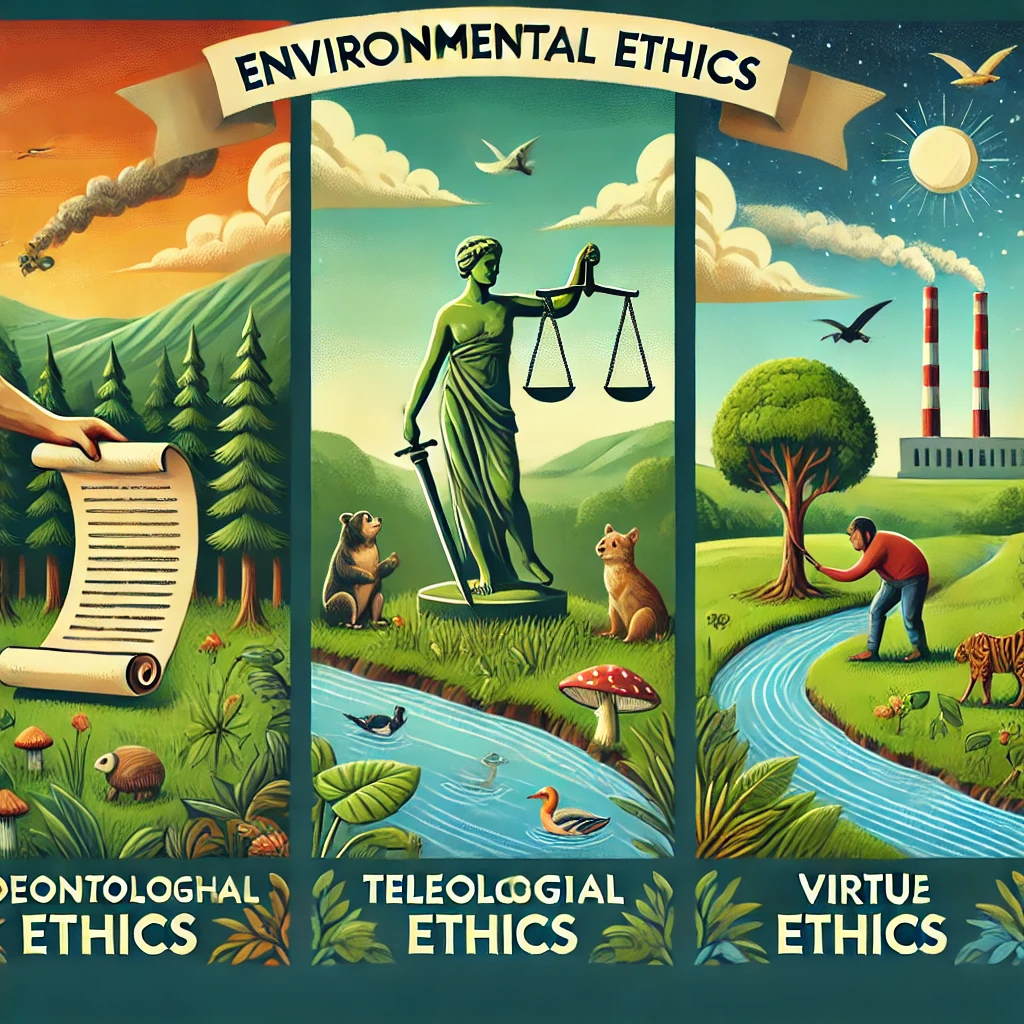
Now, I’ll generate an image illustrating the concept of Environmental Ethics with representations of duty-based, consequence-based, and virtue-based ethical approaches.
Here is the image representing Environmental Ethics with Deontological, Teleological, and Virtue Ethics approaches. Let me know if you need any modifications or further explanations!