Why is the atomic mass of iron, 55.845 amu, most similar to the mass of iron-56, yet less than 56 amu?
The atomic mass is the simple average of the masses of the two most abundant isotopes. Iron-56 is the most abundant isotope, so the atomic mass of iron is most similar to the mass of iron-56. The second most abundant isotope is iron-54, which reduces the atomic mass to less than 56 amu.
The atomic mass is the weighted average of the masses of the two most abundant isotopes. Iron-56 is the most abundant isotope, so the atomic mass of iron is most similar to the mass of iron-56. The second most abundant isotope is iron-54, which reduces the atomic mass to less than 56 amu.
The atomic mass is the weighted average of the masses of all of the isotopes. Iron-56 is the most abundant isotope, so the atomic mass of iron is most similar to the mass of iron-56. The second most abundant isotope is iron-54, which reduces the atomic mass to less than 56 amu.
The atomic mass is the simple average of the masses of all of the isotopes. Iron-56 is the most abundant isotope, so the atomic mass of iron is most similar to the mass of iron-56. The second most abundant isotope is iron-54, which reduces the atomic mass to less than 56 amu.
The correct answer and explanation is:
Correct Answer:
The atomic mass is the weighted average of the masses of all of the isotopes. Iron-56 is the most abundant isotope, so the atomic mass of iron is most similar to the mass of iron-56. The second most abundant isotope is iron-54, which reduces the atomic mass to less than 56 amu.
Explanation:
The atomic mass of an element is not a simple average but a weighted average of the masses of all naturally occurring isotopes, considering their relative abundances. The atomic mass of iron is 55.845 atomic mass units (amu), which is slightly less than 56 amu due to the contribution of isotopes with lower mass numbers.
Why is it close to Iron-56?
Iron-56 is the most abundant isotope of iron, making up about 91.7% of naturally occurring iron. Because weighted averages give greater importance to more abundant isotopes, the atomic mass of iron is very close to the atomic mass of iron-56, which is 55.9349 amu.
Why is it less than 56 amu?
Even though iron-56 is the most common isotope, other isotopes of iron contribute to the total atomic mass. The second most abundant isotope, iron-54 (5.8%), has a lower atomic mass of 53.9396 amu. Since a small fraction of iron consists of iron-54 (as well as smaller contributions from iron-57 and iron-58), the weighted average pulls the atomic mass of iron slightly below 56 amu.
Other Contributing Isotopes:
- Iron-57 (2.2%) → 56.9354 amu
- Iron-58 (0.3%) → 57.9333 amu
While these heavier isotopes slightly increase the atomic mass, the influence of iron-54 dominates in reducing the value below 56.
Thus, the atomic mass of iron (55.845 amu) results from the weighted contributions of all its isotopes, making it closest to iron-56 but slightly less than 56 due to the presence of lighter isotopes like iron-54.
Now, I’ll generate an image related to atomic mass and isotopes.
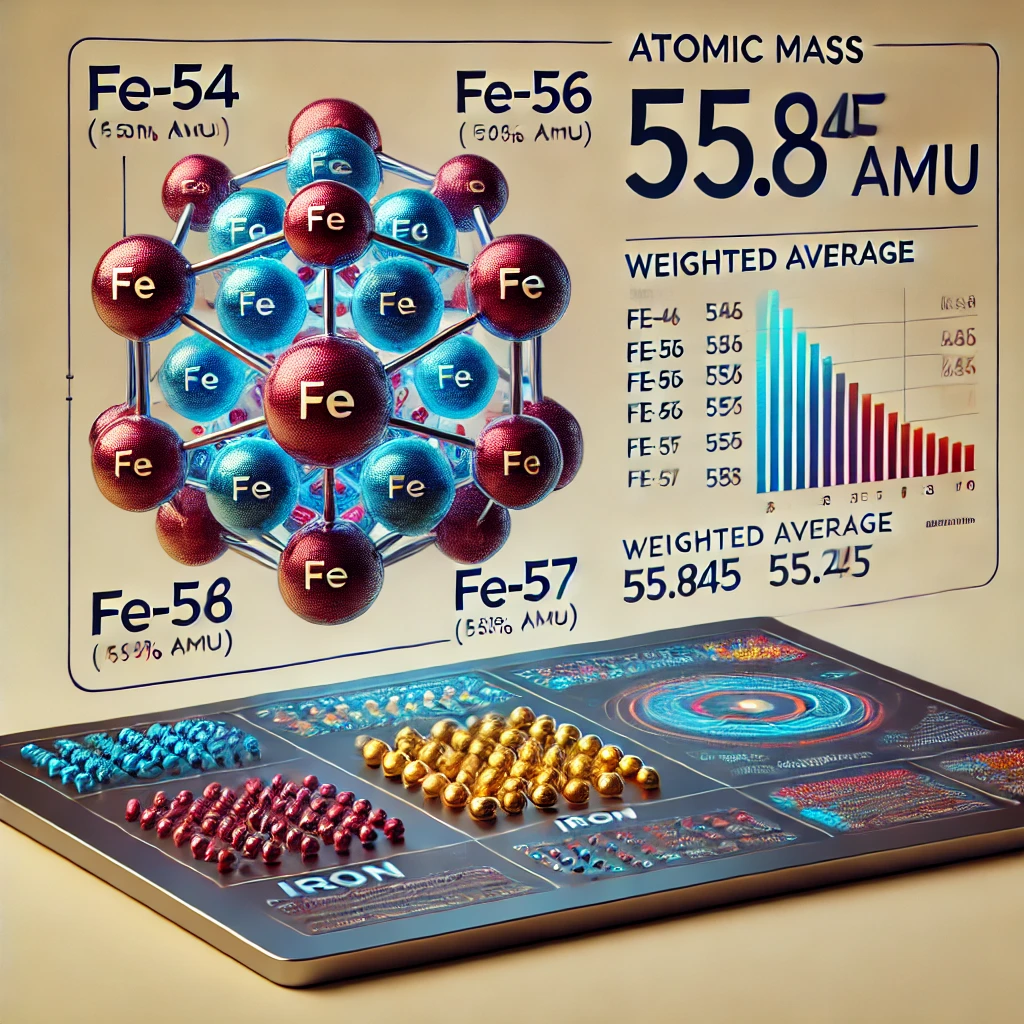
Here is the generated scientific illustration explaining the atomic mass concept of iron, including its isotopes and weighted average calculation. Let me know if you need any modifications or further explanations!