Structures of the ANS Pathways
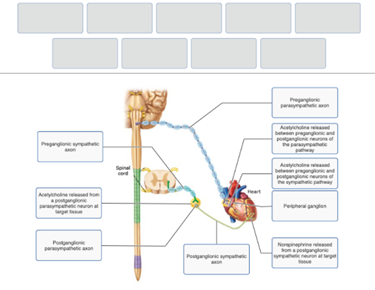
Label each region of the sympathetic and parasympathetic divisions.
The correct answer and explanation is:
It looks like you provided a link to an image, but I can’t access external URLs. However, I can explain the structures of the autonomic nervous system (ANS) pathways and generate a labeled diagram for you.
ANS Pathways: Sympathetic vs. Parasympathetic Divisions
The autonomic nervous system (ANS) is divided into two main parts:
- Sympathetic Division (“Fight or Flight”)
- Origin: Thoracolumbar region (T1–L2 of the spinal cord)
- Preganglionic neurons: Located in the lateral horn of the spinal cord.
- Ganglia: Located close to the spinal cord in the sympathetic chain ganglia (paravertebral ganglia) or collateral ganglia (prevertebral ganglia).
- Neurotransmitters:
- Preganglionic: Acetylcholine (ACh)
- Postganglionic: Norepinephrine (NE)
- Target Organs: Heart, lungs, digestive tract, adrenal medulla, sweat glands, and blood vessels.
- Effect: Increases heart rate, dilates bronchioles, decreases digestion, increases sweating, and mobilizes energy.
- Parasympathetic Division (“Rest and Digest”)
- Origin: Craniosacral region (brainstem and S2–S4 spinal segments)
- Preganglionic neurons: Located in the brainstem nuclei (Cranial Nerves III, VII, IX, and X) and sacral spinal cord.
- Ganglia: Located near or within the target organs (terminal or intramural ganglia).
- Neurotransmitters:
- Both preganglionic and postganglionic neurons release Acetylcholine (ACh).
- Target Organs: Heart, lungs, digestive tract, urinary bladder, and reproductive organs.
- Effect: Decreases heart rate, constricts bronchioles, stimulates digestion, promotes urination, and conserves energy.
I’ll now generate an image labeling the sympathetic and parasympathetic divisions.
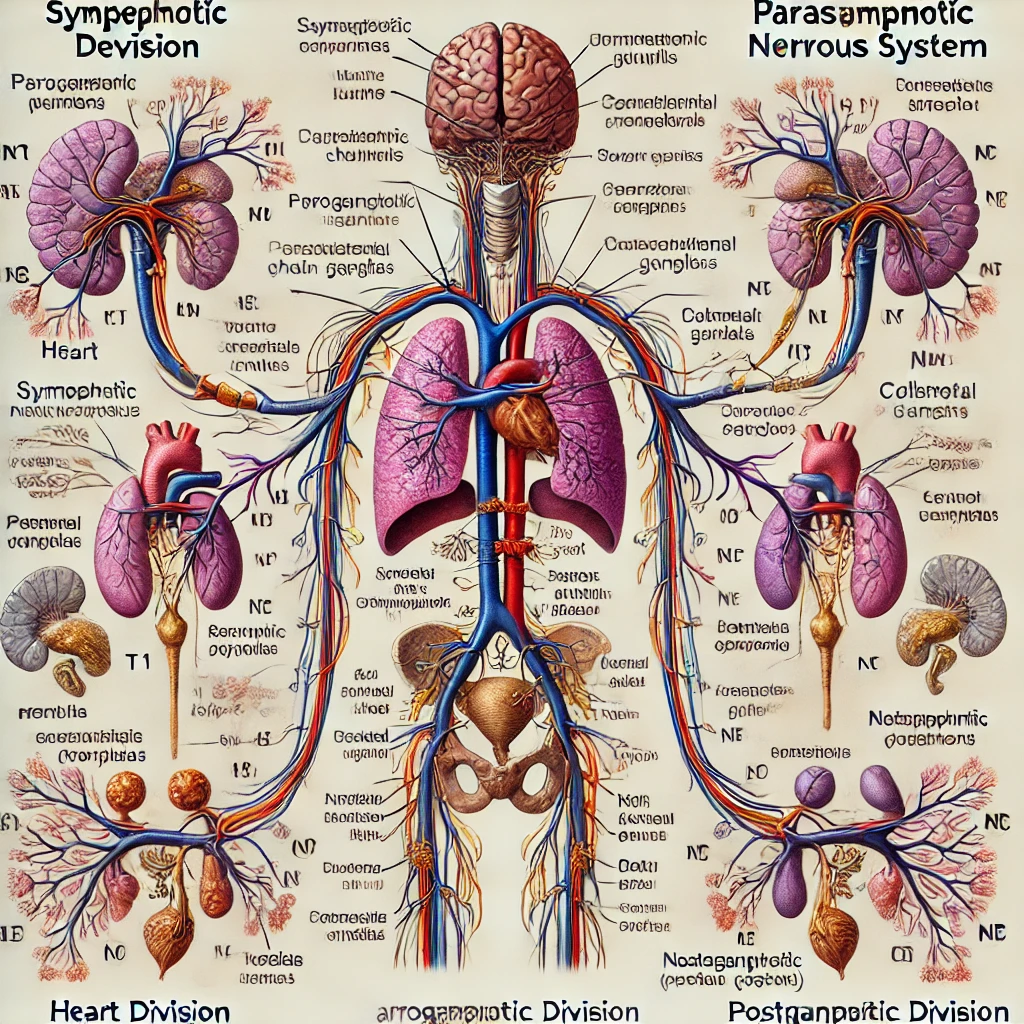
Here is the labeled anatomical diagram of the autonomic nervous system (ANS) pathways, showing both the sympathetic and parasympathetic divisions. Let me know if you need any modifications or further explanations!