Multiple Choice
Purchase frequency is related to the scheduling of advertising how?
Flighting advertising schedules are best for converting brand-loyal and frequent customers of the firm’s product.
Frequent advertising can depress the number of times a buyer purchases a product during its life cycle.
Advertising regularly is the best method to prevent a consumer from trying competitive brands.
How frequently a product is purchased is independent of the advertising schedule.
The more frequently the product is purchased, the less advertising repetition is required.
The correct answer and explanation is:
Correct Answer:
The more frequently the product is purchased, the less advertising repetition is required.
Explanation:
Advertising frequency plays a crucial role in influencing consumer behavior, but its impact varies based on how often a product is purchased. For frequently purchased products (such as groceries, personal care items, or household necessities), consumers already have regular exposure to the brand, and their buying decisions are more habitual. As a result, these products require less advertising repetition to maintain brand awareness and encourage repeat purchases.
On the other hand, products that are purchased infrequently (such as cars, furniture, or luxury goods) require a higher advertising frequency to stay top-of-mind. Since consumers engage with these products less often, there is a greater risk of them forgetting about a brand or considering alternatives when it’s time to buy. In such cases, advertisers must use strategic scheduling, such as flighting (intensive bursts of ads during peak buying times) or pulsing (a steady baseline of ads with occasional spikes), to maximize impact.
Additionally, advertising frequency must be balanced to avoid diminishing returns—where excessive exposure leads to consumer fatigue or annoyance rather than increased sales. For frequently purchased products, minimal but consistent advertising helps reinforce brand loyalty without overspending on unnecessary ads.
Marketers use data analytics to determine the ideal frequency of advertising based on purchase behavior. For example, a soft drink company may find that weekly ad exposure is sufficient to remind customers of their product, while a luxury car brand may need prolonged campaigns to guide consumers through the buying journey.
In conclusion, the purchase frequency of a product directly influences how often it should be advertised. Brands with high-frequency purchases benefit from lower ad repetition, while infrequent purchases require sustained marketing efforts to remain competitive.
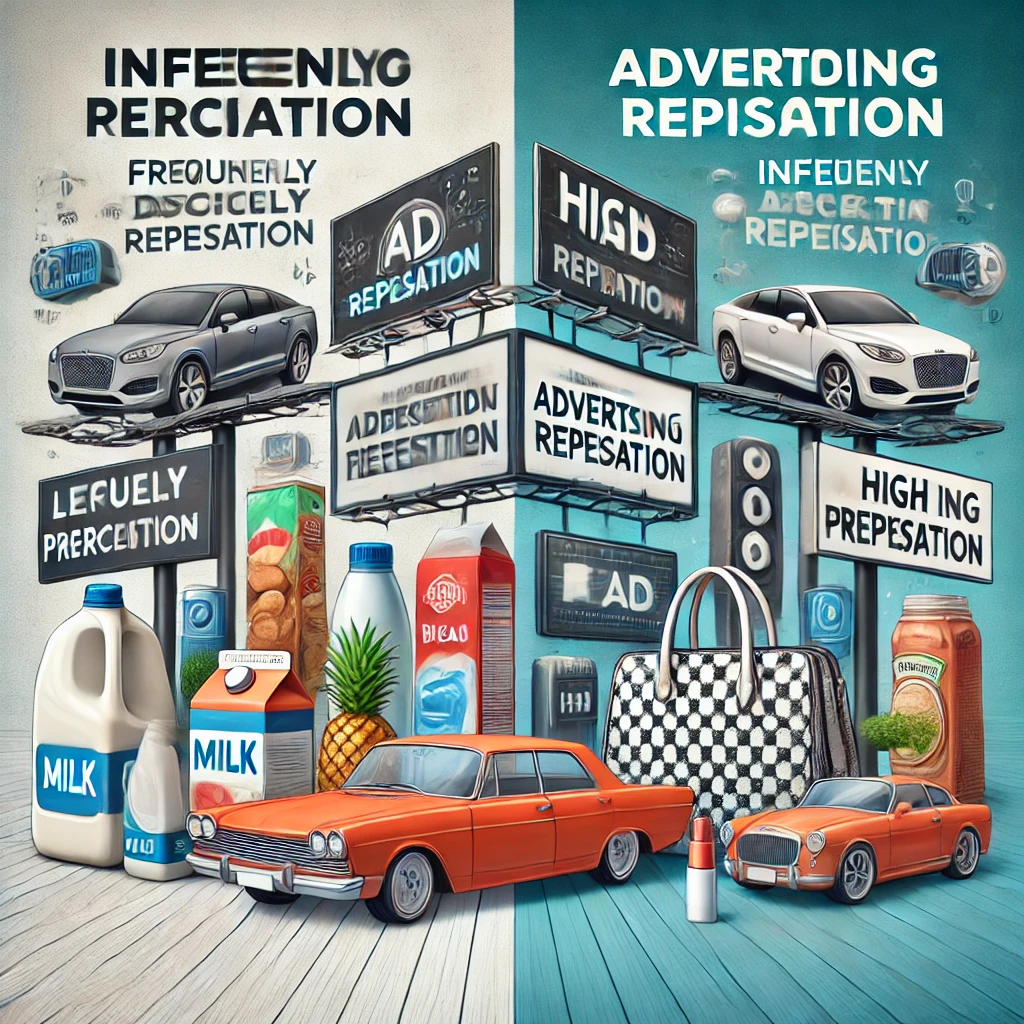
Image Generation Prompt:
“A visually appealing marketing concept image showing a contrast between frequently and infrequently purchased products. On one side, everyday grocery items like milk, bread, and toothpaste are surrounded by minimal advertising signs. On the other side, a luxury car and a designer handbag are depicted with intensive digital and billboard advertisements, emphasizing high advertising repetition for infrequent purchases.”
Here’s the generated image illustrating the contrast between frequently and infrequently purchased products in relation to advertising frequency. Let me know if you need any modifications!