What is an antigen?
The correct answer and explanation is :
An antigen is a molecule or a molecular structure that is recognized by the immune system as foreign or harmful, triggering an immune response. Antigens are usually found on the surface of pathogens like bacteria, viruses, fungi, or even abnormal cells like cancer cells. They can also be found on allergens or toxins.
Antigens are typically proteins or polysaccharides, but they can also be lipids or nucleic acids in certain cases. The immune system detects antigens through special proteins called antibodies or T-cell receptors, which are specifically designed to recognize and bind to the antigen’s structure. This recognition initiates a series of immune reactions aimed at neutralizing or destroying the pathogen or abnormal cell that carries the antigen.
There are two main types of antigens:
- Exogenous antigens: These originate from outside the body. Examples include viruses, bacteria, and pollen.
- Endogenous antigens: These are produced within the body, typically as a result of a virus infecting a cell or as a consequence of mutations in a cell (e.g., in cancer).
When the immune system encounters an antigen, it may produce antibodies, which are proteins specifically created to bind to that antigen and neutralize it. Alternatively, T-cells may target and destroy infected or abnormal cells. The response can vary depending on whether the antigen is detected as part of an infection, an allergen, or a cancerous cell.
Antigens play a critical role in vaccines as well. Vaccines often contain weakened or inactivated forms of pathogens or specific pieces of pathogens (like proteins or sugars), which act as antigens. This stimulates the immune system to prepare a defense without causing disease, making the body ready for future encounters with the pathogen.
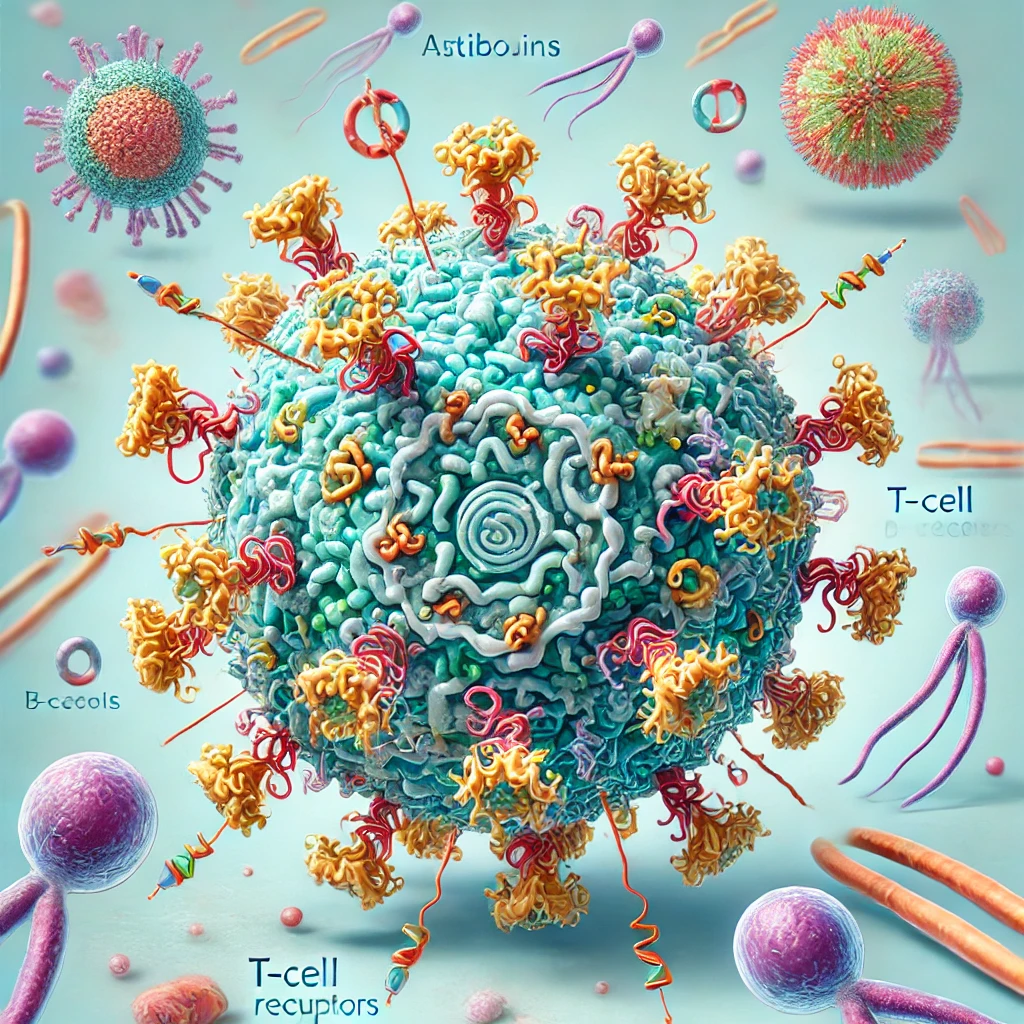
Here is an illustration showing an antigen molecule with its surface structure and how it interacts with antibodies and T-cell receptors in the immune system.