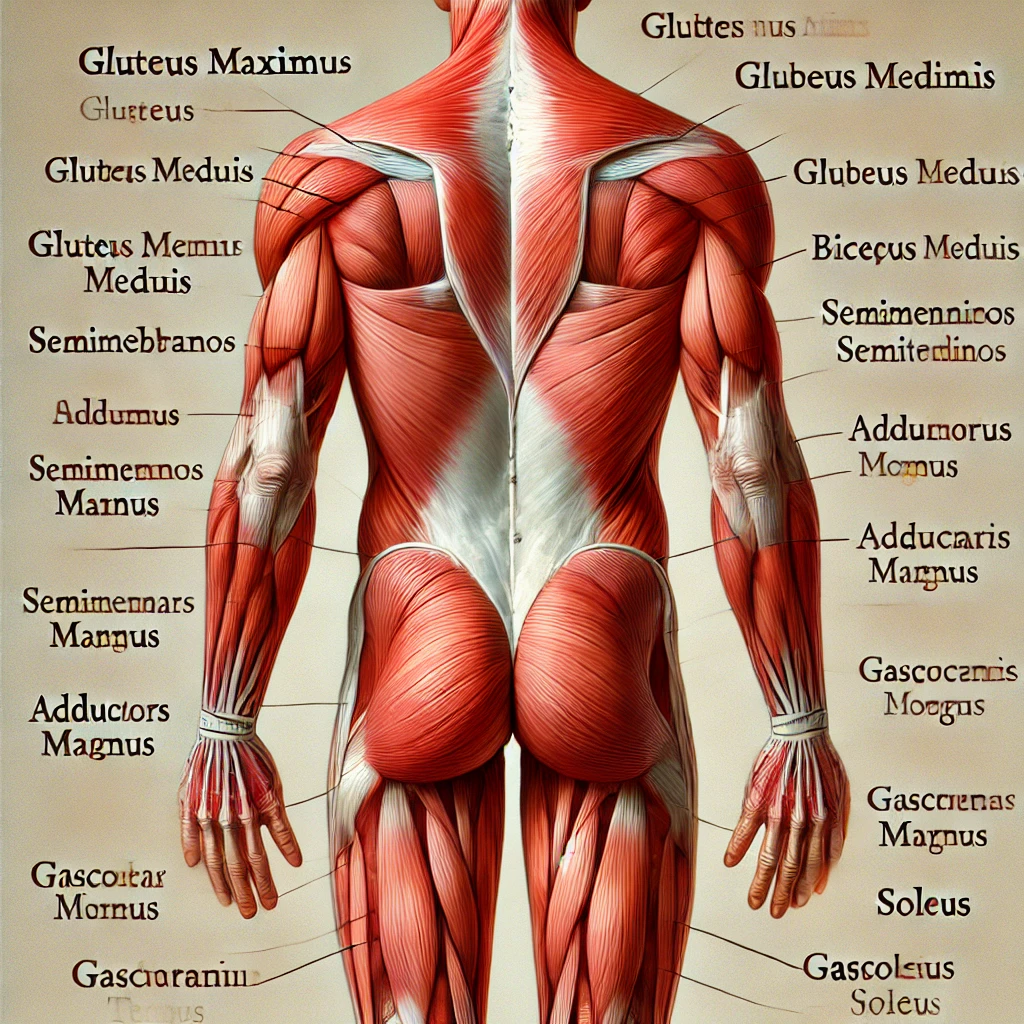
Art-Labeling Activity: Posterior muscles of the lower body Part A Drag the appropriate labels to their respective targets. Reset Help
Gluteus maximus
Fibularis longus
Semimembranosus
Gluteus medius
Biceps femoris
Somitendinosus
Gastrocnemius
Calcanea (Achilles)
Soleus
Adductor magnus
The correct answer and explanation is:
Correctly Labeled Posterior Muscles of the Lower Body:
- Gluteus Maximus – Located in the buttocks, this is the largest and strongest muscle in the body. It is responsible for hip extension, lateral rotation, and movement in actions like standing from a sitting position or climbing stairs.
- Gluteus Medius – Positioned above and slightly lateral to the gluteus maximus, it plays a key role in stabilizing the pelvis and assisting in hip abduction.
- Biceps Femoris – A part of the hamstring group, it consists of a long head and a short head. It enables knee flexion and hip extension.
- Semimembranosus – Another hamstring muscle, it lies deep to the semitendinosus and assists in knee flexion and hip extension.
- Semitendinosus – Located medial to the biceps femoris, this muscle helps with knee flexion and medial rotation of the leg.
- Adductor Magnus – A large, fan-shaped muscle in the inner thigh that assists in hip adduction, flexion, and extension.
- Fibularis Longus – Found on the lateral side of the lower leg, it aids in foot eversion and plantar flexion.
- Gastrocnemius – The primary calf muscle, it has two heads and is responsible for plantar flexion of the foot and knee flexion.
- Soleus – Located beneath the gastrocnemius, it is crucial for maintaining posture and performing plantar flexion.
- Calcaneal (Achilles) Tendon – The thick tendon that connects the gastrocnemius and soleus muscles to the calcaneus (heel bone), allowing powerful foot movements like jumping and running.
These muscles work together to provide movement, stability, and strength to the lower body, playing a crucial role in walking, running, and maintaining balance.
Now, I’ll generate the labeled image.
Here is the labeled anatomical illustration of the posterior muscles of the lower body. Let me know if you need any modifications or additional details!