Technician A says that during a power balance test, the cylinder that causes the biggest RPM drop is the weak cylinder.
Technician B says that if one spark plug wire is grounded out and the engine speed does not drop, a weak or dead cylinder is indicated. Which technician is correct?
a. Technician A only
b. Technician B only
c. Both Technicians A and B
d. Neither Technician A nor B
The correct answer and explanation is :
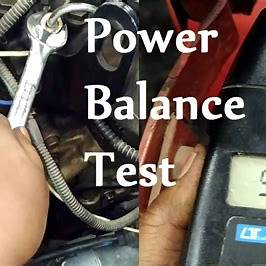
In diagnosing engine performance issues, a cylinder power balance test is a common procedure used to identify underperforming or non-functional cylinders. This test assesses whether each cylinder contributes equally to the engine’s overall power output.
Technician A’s Statement:
Technician A asserts that during a power balance test, the cylinder causing the largest RPM drop is the weak cylinder. This statement is incorrect. In a properly functioning engine, each cylinder contributes equally to the engine’s power. When a cylinder is disabled during the test (by interrupting its spark or fuel supply), the engine’s RPM will drop proportionally to the power that cylinder was contributing. Therefore, a healthy cylinder, when disabled, will cause a significant RPM drop. Conversely, if disabling a cylinder results in little to no change in RPM, it indicates that the cylinder was already contributing minimally or not at all, signifying it as the weak or non-functional cylinder.
Technician B’s Statement:
Technician B states that grounding out one spark plug wire without a corresponding drop in engine speed indicates a weak or dead cylinder. This statement is correct. Grounding the spark plug wire effectively disables the cylinder. In a healthy cylinder, this action would cause a noticeable decrease in RPM. If there’s no change in RPM upon grounding the spark plug wire, it suggests that the cylinder was not contributing to the engine’s power, indicating it is weak or dead.
Conclusion:
Based on the above explanations, Technician B is correct. A cylinder that, when disabled, causes the least change in engine RPM is identified as the weak or non-functional cylinder. Therefore, the correct answer is:
b. Technician B only
Explanation:
A cylinder power balance test involves disabling each cylinder individually and observing the change in engine RPM. The principle is that a healthy cylinder contributes significantly to the engine’s power; thus, disabling it will result in a noticeable drop in RPM. If disabling a cylinder causes minimal or no change in RPM, it indicates that the cylinder was not contributing effectively to the engine’s power, identifying it as weak or dead.
Procedure for Conducting a Cylinder Power Balance Test:
- Preparation:
- Ensure the engine is at normal operating temperature.
- Connect a tachometer to monitor engine RPM accurately.
- Disabling Cylinders:
- Disable each cylinder one at a time. This can be done by grounding the spark plug wire or disconnecting the fuel injector for that cylinder. It’s crucial to follow manufacturer-recommended procedures to avoid damaging the ignition system.
- Observing RPM Changes:
- After disabling a cylinder, observe the drop in engine RPM. Record the RPM drop for each cylinder.
- Analyzing Results:
- Compare the RPM drops recorded. A healthy cylinder will show a significant RPM drop when disabled. A weak or non-functional cylinder will show little to no change in RPM when disabled.
Importance of the Test:
Identifying weak or dead cylinders is crucial for maintaining engine performance, fuel efficiency, and reducing emissions. Once a weak cylinder is identified, further diagnostics can determine the underlying cause, such as issues with the spark plug, fuel injector, compression, or other components.
In summary, during a cylinder power balance test, the cylinder that, when disabled, causes the least change in engine RPM is identified as the weak or non-functional cylinder. Technician B’s understanding aligns with this diagnostic approach, making his statement correct.