Which of the following is an example of potential rather than kinetic energy?
A) water rushing over Niagara Falls
B) a crawling beetle foraging for food
C) a molecule of glucose
D) light flashes emitted by a firefly.
The correct answer and explanation is :
The correct answer is:
C) a molecule of glucose
Explanation:
Energy exists in two primary forms: kinetic energy (energy of motion) and potential energy (stored energy). Let’s analyze each option to determine which one represents potential energy.
- Water rushing over Niagara Falls (A) – This represents kinetic energy because the water is in motion. Moving water has energy due to its motion and ability to do work (e.g., eroding rocks, turning turbines).
- A crawling beetle foraging for food (B) – This also represents kinetic energy since the beetle is moving, which means it is using energy for motion.
- A molecule of glucose (C) – This represents potential energy because glucose stores chemical energy within its molecular bonds. This energy can later be released through cellular respiration to fuel biological processes.
- Light flashes emitted by a firefly (D) – This represents kinetic energy because the emission of light involves the release of energy as photons, which are in motion.
Since a molecule of glucose (C) contains stored chemical energy that can later be converted into kinetic energy, it is the best example of potential energy among the given choices.
Additional Insight:
Potential energy can exist in various forms, such as:
- Chemical potential energy (stored in food, fuel, batteries)
- Gravitational potential energy (a rock on a cliff, water behind a dam)
- Elastic potential energy (compressed spring, stretched rubber band)
In biological systems, glucose is a key energy source, and its stored energy is released through metabolism to power cellular activities.
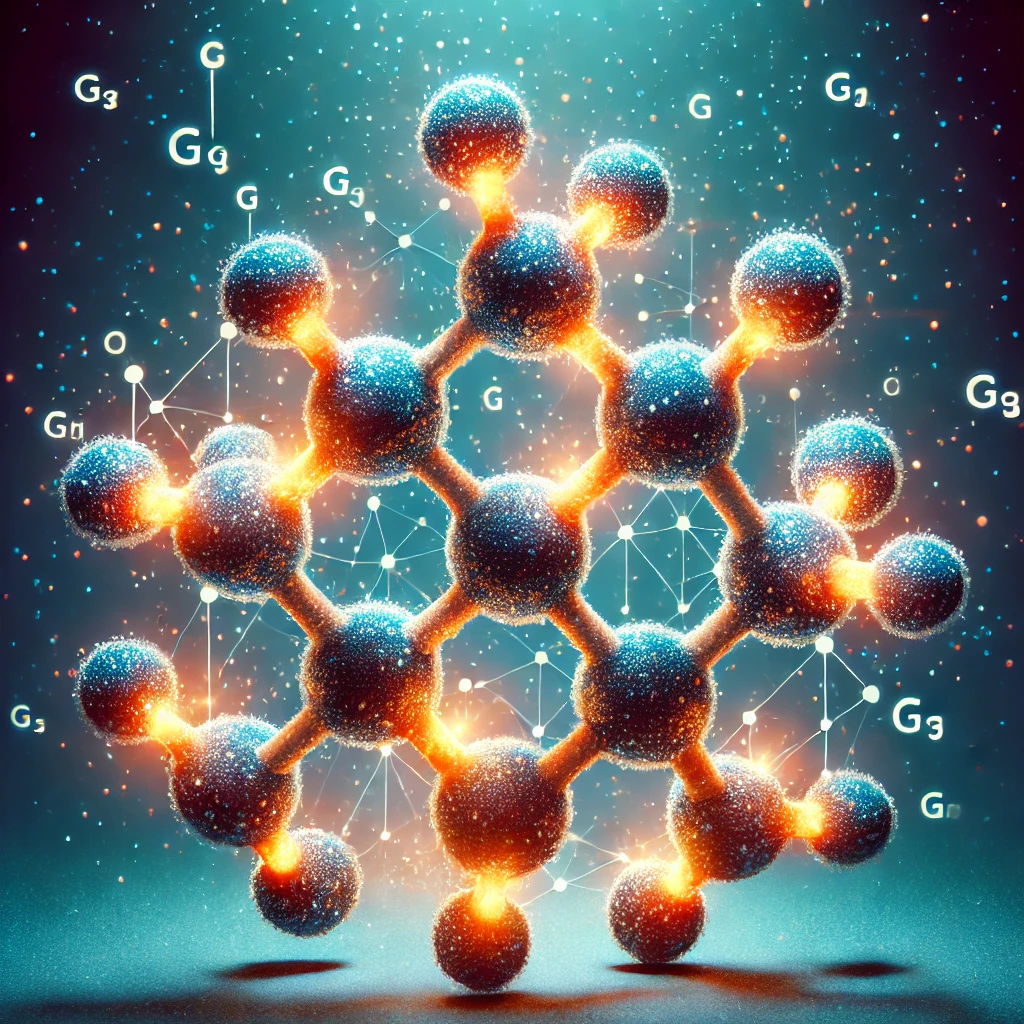
Here is an artistic representation of a glucose molecule with stored potential energy. It visually illustrates how chemical bonds in glucose hold energy that can be released for biological processes.