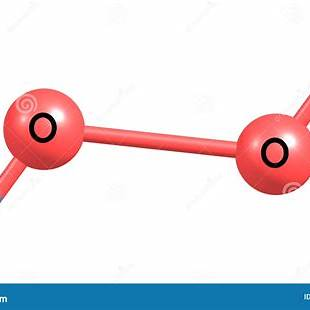
How many atoms are there in one molecule of hydrogen peroxide?
The correct answer and explanation is :
A single molecule of hydrogen peroxide (H₂O₂) consists of four atoms: two hydrogen (H) atoms and two oxygen (O) atoms.
The molecular formula H₂O₂ indicates that each molecule contains two hydrogen atoms and two oxygen atoms. This composition differs from that of water (H₂O), which has two hydrogen atoms and one oxygen atom per molecule. The additional oxygen atom in hydrogen peroxide contributes to its unique chemical properties, distinguishing it from water.
Structurally, hydrogen peroxide can be visualized as two hydroxyl groups (–OH) connected by a single oxygen-oxygen bond. This bond configuration is relatively unstable, making hydrogen peroxide a reactive compound. The oxygen-oxygen bond, known as a peroxide bond, is weaker than the oxygen-hydrogen bonds, rendering the molecule more susceptible to decomposition.
The instability of the peroxide bond means that hydrogen peroxide readily decomposes into water (H₂O) and oxygen gas (O₂), especially in the presence of heat, light, or catalysts like manganese dioxide (MnO₂). This decomposition reaction is exothermic, releasing energy in the form of heat:
2 H₂O₂ → 2 H₂O + O₂
The ability to release oxygen makes hydrogen peroxide a potent oxidizing agent, useful in various applications such as disinfection, bleaching, and as a propellant in rocketry.
Understanding the atomic composition and structure of hydrogen peroxide is crucial for comprehending its chemical behavior and reactivity. The presence of two oxygen atoms linked together creates a relatively weak bond, leading to the molecule’s propensity to decompose and participate in oxidation-reduction reactions.
In summary, a hydrogen peroxide molecule comprises four atoms in total: two hydrogen atoms and two oxygen atoms. This specific atomic arrangement imparts distinctive properties to the molecule, making it both useful in various industrial and medical applications and necessitating careful handling due to its reactive nature.