Your psychology professor refers to this as the primary relay station for sensory information. What structure are they referring to?
A. thalamus
B. hypothalamus
C. amygdala
D. hippocampus
The correct answer and explanation is :
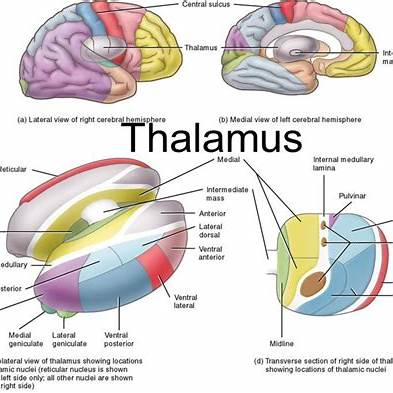
The correct answer is A. thalamus.
The thalamus is a vital structure located deep within the brain, near its center, and is part of the diencephalon. It serves as the primary relay station for sensory information, processing and transmitting data from various sensory modalities to the appropriate regions of the cerebral cortex for further interpretation. This includes signals related to vision, hearing, touch, and taste, though notably, olfactory (smell) information bypasses the thalamus and projects directly to the olfactory cortex.
Structurally, the thalamus is composed of two symmetrical halves, each containing multiple nuclei that specialize in different functions. These nuclei receive sensory inputs and relay them to specific cortical areas. For example, visual information from the retina is sent to the lateral geniculate nucleus of the thalamus, which then projects to the primary visual cortex. Similarly, auditory information is relayed through the medial geniculate nucleus to the primary auditory cortex. This organized relay system ensures that sensory data is accurately processed and perceived.
Beyond sensory processing, the thalamus plays a crucial role in motor control by transmitting information from the basal ganglia and cerebellum to the motor cortex, aiding in the coordination of voluntary movements. It is also involved in regulating consciousness, sleep, and alertness by interacting with various brain structures responsible for these functions. Damage or dysfunction in the thalamus can lead to sensory deficits, motor impairments, and disturbances in consciousness, underscoring its importance in overall brain function.
In contrast, the hypothalamus (option B) is located below the thalamus and is primarily responsible for regulating autonomic functions and hormonal balance, maintaining the body’s internal equilibrium. The amygdala (option C) is involved in processing emotions, particularly fear and pleasure responses. The hippocampus (option D) is essential for memory formation and spatial navigation. While these structures are integral to brain function, they do not serve as the primary relay station for sensory information—that role is specific to the thalamus.
In summary, the thalamus acts as the central hub for processing and relaying sensory information to the cerebral cortex, playing a pivotal role in how we perceive and interact with the world around us.