What factors influence hemoglobin saturation?
The correct answer and explanation is :
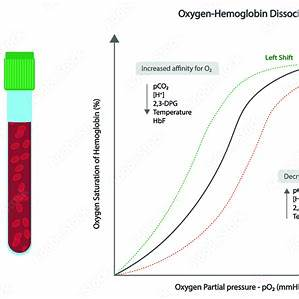
Hemoglobin saturation refers to the percentage of hemoglobin molecules in the blood that are bound to oxygen. This is depicted by the oxygen-hemoglobin dissociation curve, which illustrates hemoglobin’s affinity for oxygen under varying conditions. Several factors can shift this curve, thereby influencing hemoglobin’s oxygen-binding capacity:
1. pH Levels (Bohr Effect):
A decrease in blood pH (increased acidity) reduces hemoglobin’s affinity for oxygen, causing the dissociation curve to shift to the right. This facilitates oxygen release to tissues. Conversely, an increase in pH (alkalinity) enhances hemoglobin’s oxygen affinity, shifting the curve to the left and reducing oxygen delivery to tissues.
2. Carbon Dioxide (CO₂) Concentration:
Elevated CO₂ levels in the blood lead to the formation of carbaminohemoglobin, which stabilizes hemoglobin in a state that favors oxygen release, shifting the curve to the right. Lower CO₂ levels result in a leftward shift, indicating increased oxygen affinity.
3. Temperature:
Higher body temperatures decrease hemoglobin’s oxygen affinity, shifting the curve to the right and promoting oxygen unloading to tissues. Lower temperatures increase oxygen affinity, shifting the curve to the left and hindering oxygen release.
4. 2,3-Bisphosphoglycerate (2,3-BPG):
2,3-BPG is a byproduct of red blood cell metabolism that binds to hemoglobin, reducing its oxygen affinity and shifting the curve to the right. Increased 2,3-BPG levels facilitate oxygen release to tissues, while decreased levels enhance oxygen binding.
5. Carbon Monoxide (CO) Exposure:
CO binds to hemoglobin with a much higher affinity than oxygen, forming carboxyhemoglobin and reducing the number of available oxygen-binding sites. This shifts the curve to the left, impairing oxygen delivery to tissues and potentially leading to hypoxia.
6. Fetal Hemoglobin (HbF):
HbF differs structurally from adult hemoglobin and has a higher oxygen affinity, resulting in a leftward shift of the curve. This adaptation allows efficient transfer of oxygen from the maternal to the fetal bloodstream.
Understanding these factors is crucial in clinical settings, as they influence oxygen delivery to tissues and can guide therapeutic interventions in conditions like respiratory distress, anemia, and carbon monoxide poisoning.