Which statement best describes the role of the speakers in the two Hughes poems? In both poems, the speaker describes a scene or event. In both poems, the speaker uses a first-person point of view. The speaker in “Harlem” expresses thoughts and feelings; the speaker in “The Weary Blues” describes an emotional scene. The speaker in “Harlem” describes a violent scene; the speaker in “The Weary Blues” expresses sorrow.
The correct answer and explanation is:
The correct answer is:
The speaker in “Harlem” expresses thoughts and feelings; the speaker in “The Weary Blues” describes an emotional scene.
Explanation:
Langston Hughes, a key figure in the Harlem Renaissance, often wrote poetry that captured the experiences, struggles, and emotions of African Americans. Both “Harlem” and “The Weary Blues” reflect this focus, but their speakers play different roles.
In “Harlem”, the speaker contemplates the consequences of a deferred dream. The poem presents a series of rhetorical questions, such as “What happens to a dream deferred?” and offers vivid imagery to explore possible outcomes, like a dream drying up “like a raisin in the sun” or festering “like a sore.” The speaker is not describing an external event but rather expressing thoughts and emotions about frustration, deferred opportunities, and unfulfilled aspirations. The poem ends with a powerful question—“Or does it explode?”—suggesting that prolonged injustice and disappointment might lead to unrest or rebellion.
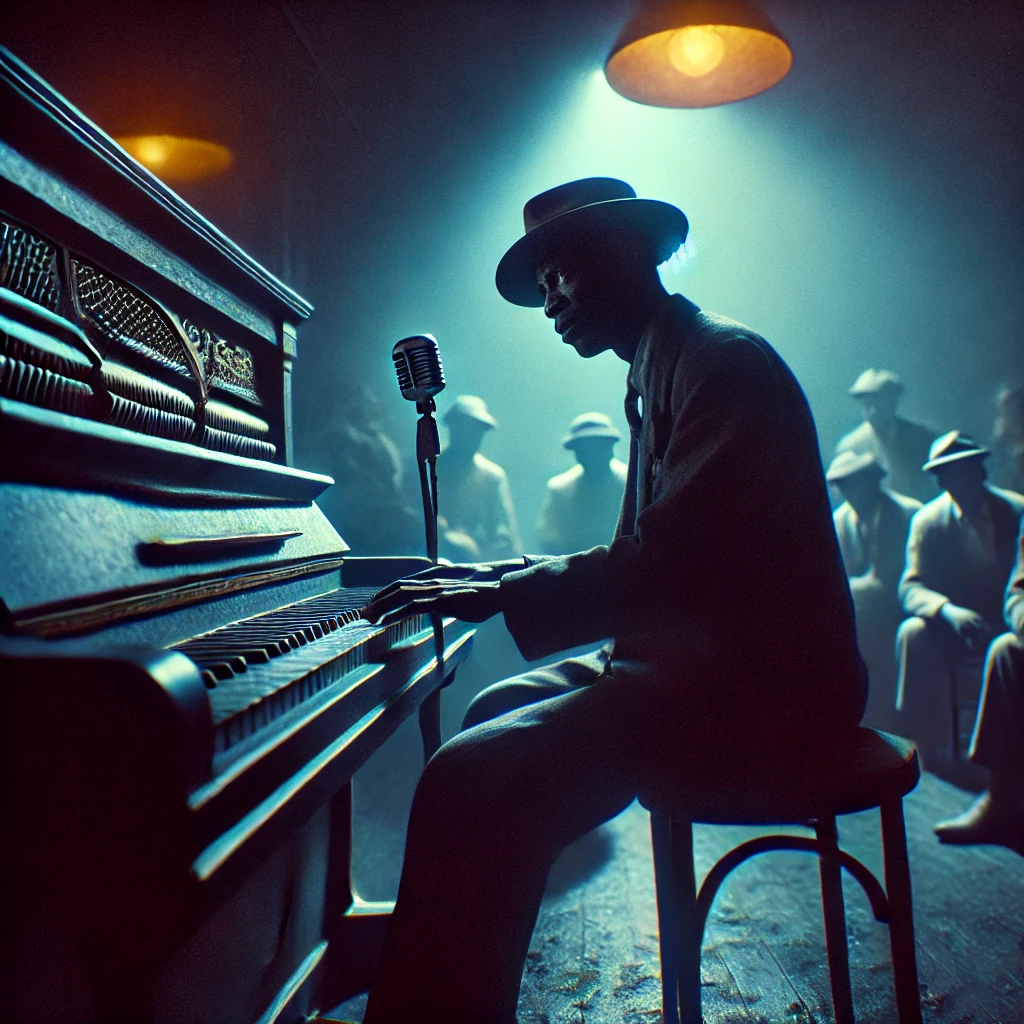
In contrast, “The Weary Blues” features a speaker who describes a blues musician performing in Harlem. This poem is more observational, capturing the mood of the performance and the emotional depth of the musician’s song. The speaker describes how the musician plays with a deep, sorrowful expression, swaying to the rhythm of his blues: “Rocking back and forth to a mellow croon.” Unlike “Harlem”, this poem does not focus on internal reflection but instead paints a vivid picture of an emotional scene, using rich sensory details to immerse the reader in the moment.
Thus, while both poems explore themes of struggle and emotion, their speakers serve different functions: one expresses personal thoughts and feelings, while the other describes a poignant moment in time.
Image Generation Prompt:
A moody Harlem jazz club scene in the 1920s, featuring a weary African American blues musician playing the piano under dim blue lighting. The musician has a sorrowful expression, and the atmosphere is melancholic yet soulful, with a small audience watching. The scene captures the depth of emotion in the music, emphasizing the themes of struggle and resilience.
Here is the image of a moody Harlem jazz club scene, capturing the depth of emotion in the blues musician’s performance. Let me know if you need any adjustments!