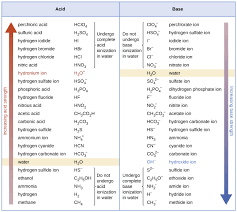
Which of the following is the strongest acid?
A) HF ( Ka for HF is 7.2 × 10⁻⁴)
B) HCN (Ka for HCN is 4.9 × 10⁻¹⁰)
C) HCNO (Ka for HCNO is 2 × 10⁻¹⁰)
D) H3BO3 (Ka for H3BO3 is 5.4 × 10⁻¹⁰)
The correct answer and explanation is :
The strongest acid among the given options is HF (hydrofluoric acid) because it has the highest acid dissociation constant (Ka).
Explanation:
Acid strength is determined by its Ka value, which represents how much the acid ionizes in water. A higher Ka value means greater ionization and a stronger acid. Let’s compare the given Ka values:
- HF: Ka = 7.2 × 10⁻⁴
- HCN: Ka = 4.9 × 10⁻¹⁰
- HCNO: Ka = 2 × 10⁻¹⁰
- H₃BO₃: Ka = 5.4 × 10⁻¹⁰
Since HF has the largest Ka value, it ionizes more in water compared to the others, making it the strongest acid among the given choices.
Why is HF the strongest?
- Higher Ka Value: HF has a Ka of 7.2 × 10⁻⁴, significantly greater than the other acids. This means HF dissociates more in solution, releasing more H⁺ ions.
- Bond Strength: The H-F bond is relatively strong, but due to the high electronegativity of fluorine, it still allows partial ionization.
- Comparison with Other Acids:
- HCN and HCNO are much weaker acids because their Ka values are several orders of magnitude lower.
- H₃BO₃ (Boric Acid) is not even a typical proton-donating acid but acts as a Lewis acid, meaning it does not release H⁺ ions directly.
Thus, HF is the strongest acid in this list. However, note that HF is still considered a weak acid compared to strong acids like HCl or HNO₃.