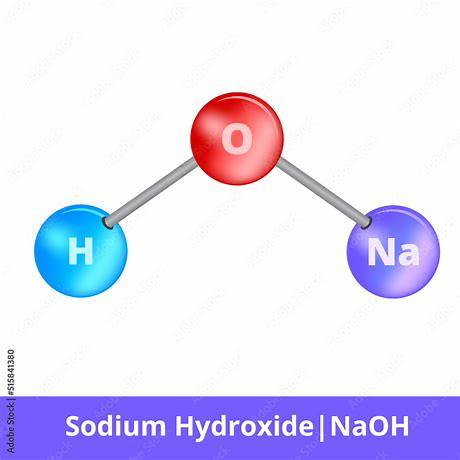
Which of the following is correctly identified?
A) NH3, strong acid
B) NaOH, strong base
C) HCl, weak acid
D) H2CO3, strong acid
E) Ca(OH)2, weak base
The correct answer and explanation is :
The correct answer is B) NaOH, strong base.
Explanation:
- A) NH3, strong acid: Ammonia (NH3) is not an acid; rather, it is a weak base. It can accept a proton (H⁺) to form ammonium ion (NH4⁺) in aqueous solutions. Thus, this statement is incorrect.
- B) NaOH, strong base: Sodium hydroxide (NaOH) is indeed a strong base. A strong base is one that completely dissociates in water, releasing OH⁻ ions. NaOH dissociates as follows: [ \text{NaOH} \rightarrow \text{Na}^+ + \text{OH}^- ] NaOH is a strong base because it dissociates completely in aqueous solutions, increasing the concentration of hydroxide ions, making the solution highly alkaline. Thus, this statement is correct.
- C) HCl, weak acid: Hydrochloric acid (HCl) is a strong acid, not a weak acid. It completely dissociates in water into H⁺ and Cl⁻ ions. Therefore, this statement is incorrect.
- D) H2CO3, strong acid: Carbonic acid (H2CO3) is a weak acid. It only partially dissociates in water. The dissociation occurs in two steps: [ \text{H}_2\text{CO}_3 \rightleftharpoons \text{H}^+ + \text{HCO}_3^- ] Since it does not fully dissociate, it is considered a weak acid. Thus, this statement is incorrect.
- E) Ca(OH)2, weak base: Calcium hydroxide (Ca(OH)2) is a strong base, although it is less soluble in water compared to NaOH. When it dissolves, it releases hydroxide ions (OH⁻), making the solution strongly alkaline. Therefore, this statement is incorrect.
In summary:
- NaOH is a strong base that dissociates completely in water, and the correct answer is B.