The momentum of an object is determined to be 7.2 × 10⁻³ kg·m/s. Express this quantity as provided or use any equivalent unit. (Note: 1 kg = 1000 g).
The correct answer and explanation is :
To express the momentum of an object as provided or in an equivalent unit, we start with the given quantity of momentum: Momentum=7.2×10⁻³ kg\cdotpm/s\text{Momentum} = 7.2 \times 10^{-3} \, \text{kg·m/s}
We are asked to express the momentum in equivalent units, specifically using grams (g) instead of kilograms (kg). To convert from kilograms to grams, we use the conversion factor: 1 kg=1000 g1 \, \text{kg} = 1000 \, \text{g}
Conversion:
Given that 1 kg = 1000 g, we can convert the momentum from kilograms to grams by multiplying by 1000: Momentum=(7.2×10⁻³ kg\cdotpm/s)×1000 g/kg\text{Momentum} = (7.2 \times 10^{-3} \, \text{kg·m/s}) \times 1000 \, \text{g/kg} Momentum=7.2 g\cdotpm/s\text{Momentum} = 7.2 \, \text{g·m/s}
Thus, the momentum of the object is 7.2 g·m/s.
Explanation:
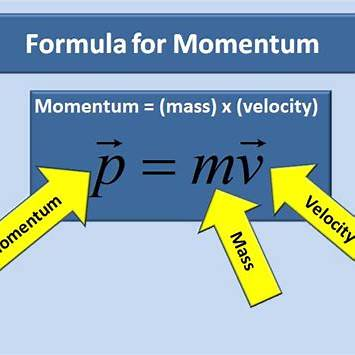
Momentum is a physical quantity that describes the motion of an object. It is the product of an object’s mass and velocity: Momentum(p)=Mass(m)×Velocity(v)\text{Momentum} (p) = \text{Mass} (m) \times \text{Velocity} (v)
In this case, the momentum is given in kilogram·meter per second (kg·m/s), which is the standard SI unit for momentum. However, if we want to express this quantity in other units (e.g., using grams instead of kilograms), we need to apply the appropriate conversion factor.
The conversion from kilograms to grams is straightforward: since 1 kg = 1000 g, multiplying the momentum in kg·m/s by 1000 gives the equivalent value in g·m/s. This transformation is simply a scaling factor that adjusts the unit of mass while keeping the value proportional.
To summarize, the momentum of the object is 7.2 × 10^-3 kg·m/s, which is equivalent to 7.2 g·m/s when expressed using grams.