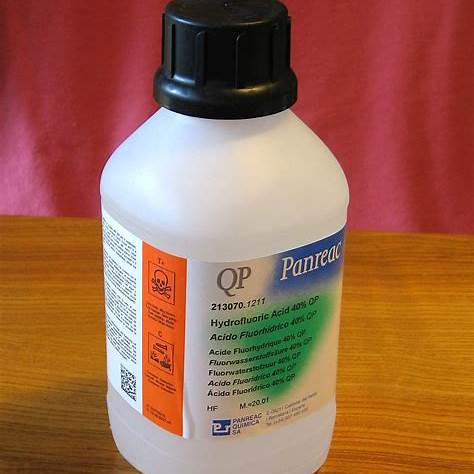
The Ka for hydrofluoric acid is 7.2 × 10⁻⁴. This means that HF is
A) neutral in water solution.
B) able to react with HCl.
C) a weak acid.
D) a strong acid.
E) ionic.
The correct answer and explanation is :
The correct answer is C) a weak acid.
Explanation:
The acid dissociation constant (Ka) is a measure of the strength of an acid in solution. It represents the equilibrium constant for the dissociation of an acid (HA) into its conjugate base (A-) and hydrogen ions (H+). The higher the Ka value, the stronger the acid, because a stronger acid dissociates more completely in water.
For hydrofluoric acid (HF), the Ka value is 7.2 × 10⁻⁴. This is a relatively small value, which means that only a small fraction of the HF molecules dissociate into ions in water. This behavior is characteristic of weak acids.
Key points about weak acids:
- A weak acid dissociates only partially in water, meaning that at equilibrium, a significant proportion of the acid molecules remain undissociated.
- A higher Ka (greater than 1) corresponds to a stronger acid that dissociates almost completely in water (e.g., HCl or HNO₃).
- Weak acids like HF have a Ka less than 1, and since 7.2 × 10⁻⁴ is much less than 1, HF is a weak acid.
Why not the other options?
- A) Neutral in water solution: HF is not neutral. A neutral solution would have a pH of 7, but HF dissociates slightly to produce H+ ions, making the solution acidic (pH < 7).
- B) Able to react with HCl: HF is not typically known for reacting with HCl. Both are acids, and generally, acids do not react with each other unless there are specific conditions.
- D) A strong acid: HF is not a strong acid because it does not dissociate completely in water. Strong acids like HCl, HNO₃, and H₂SO₄ dissociate completely.
- E) Ionic: HF is a molecular compound and not ionic. It does dissociate into ions in solution, but it is not an ionic compound to begin with.
Image of HF dissociation: