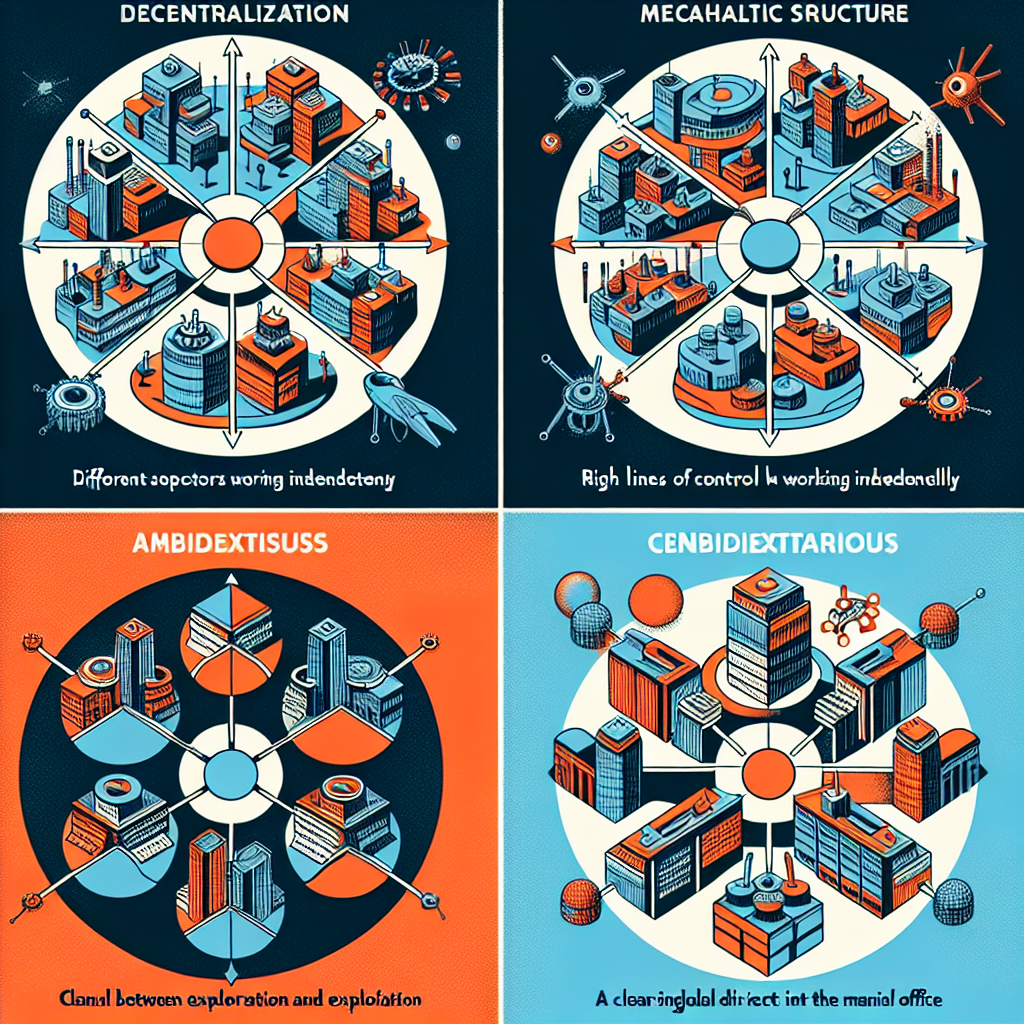
Companies with a high degree of specialization are organizations.
Multiple Choice
decentralized
mechanistic
ambidextrous
centralize
The correct answer and explanation is :
Correct Answer: Mechanistic
Explanation (300 words):
Companies with a high degree of specialization are best described as mechanistic organizations. Mechanistic structures are characterized by clearly defined roles, hierarchical authority, rigid departmentalization, and a high level of formalization. In such systems, tasks are broken down into specialized jobs, and employees focus on narrow sets of duties. This allows for efficiency, consistency, and predictability — key features in highly specialized environments.
The term “mechanistic” was introduced by theorists Burns and Stalker, who contrasted it with “organic” structures. Mechanistic organizations resemble machines: every part (or person) has a specific function, and coordination occurs through strict procedures and centralized decision-making. Specialization plays a critical role here, as it supports standardization and efficiency. These organizations often use detailed rules, procedures, and performance standards to ensure uniformity and control.
Industries such as manufacturing, military operations, and large bureaucracies often adopt mechanistic structures because they benefit from routine processes and stable environments. For example, an automobile factory might employ highly specialized workers — one person installs windshields, another fits tires, and so on. This high specialization increases productivity and reduces errors, but may limit flexibility and innovation.
Let’s briefly look at why the other options don’t fit:
- Decentralized organizations push decision-making downward, often associated with organic structures and flexibility — not high specialization.
- Ambidextrous organizations strive to balance exploitation (efficiency) and exploration (innovation), which involves adaptability and less rigid roles.
- Centralized organizations focus decision-making at the top but don’t necessarily rely on specialization. While they may coexist with specialization, it’s not the defining trait.
In summary, companies with a high degree of specialization align most closely with mechanistic structures because of their focus on efficiency, control, and clearly defined roles.