The function of EF-Tu during protein synthesis is to:
A deliver aminoacyl-tRNAs to the A site
B assist GTP binding to EF-G
C assist ATP binding to EF-G
D deliver Met-tRNA Met to the P site
E assist GDP release from EF-G
The correct answer and explanation is :
Correct Answer: A. Deliver aminoacyl-tRNAs to the A site
Explanation:
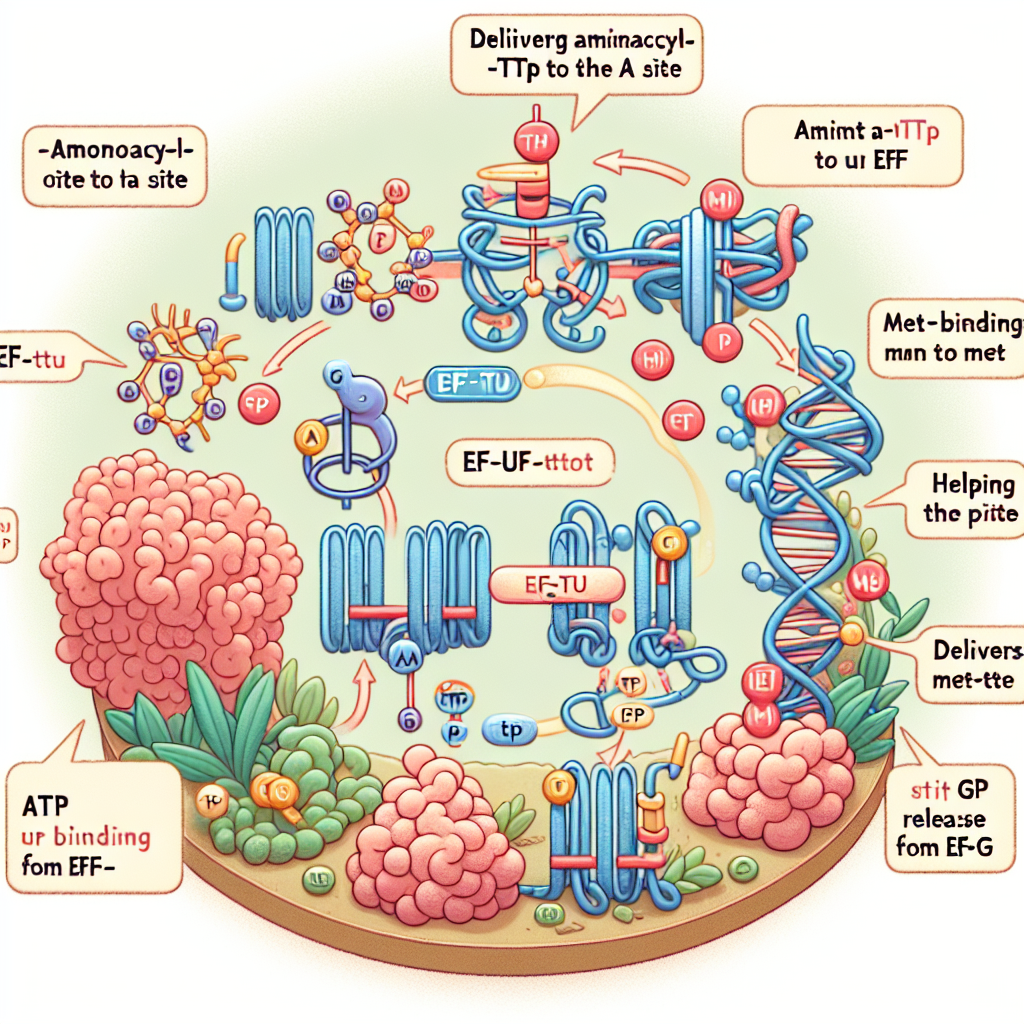
During protein synthesis in prokaryotes, elongation factor Tu (EF-Tu) plays a crucial role in the elongation phase of translation by ensuring the correct delivery of aminoacyl-tRNAs (aa-tRNAs) to the ribosome. Specifically, EF-Tu binds to GTP and forms a ternary complex with an aminoacyl-tRNA. This complex is responsible for delivering the aminoacyl-tRNA to the A site of the ribosome.
Once the ternary complex reaches the A site, the ribosome checks the codon-anticodon interaction between the mRNA and the incoming tRNA. If the match is correct, GTP is hydrolyzed to GDP by EF-Tu. This hydrolysis induces a conformational change in EF-Tu, causing it to release the aminoacyl-tRNA, allowing the tRNA to fully enter the A site and participate in peptide bond formation.
After GTP hydrolysis and release from the ribosome, EF-Tu bound to GDP is inactive. To become active again, EF-Tu requires the help of another elongation factor, EF-Ts, which acts as a guanine nucleotide exchange factor (GEF). EF-Ts facilitates the release of GDP from EF-Tu, allowing a new GTP molecule to bind and regenerate the active EF-Tu•GTP complex for another round of elongation.
EF-Tu’s function is critical for ensuring translational fidelity. By allowing only correctly paired codon-anticodon interactions to proceed (as incorrect pairings delay GTP hydrolysis), EF-Tu contributes to the high accuracy of protein synthesis.
Other options explained briefly:
- B & C: EF-G is involved in translocation, but EF-Tu does not assist in its GTP or ATP binding.
- D: Met-tRNAMet is delivered to the P site by initiation factors, not EF-Tu.
- E: GDP release from EF-G is not facilitated by EF-Tu but is part of EF-G’s own recycling process.