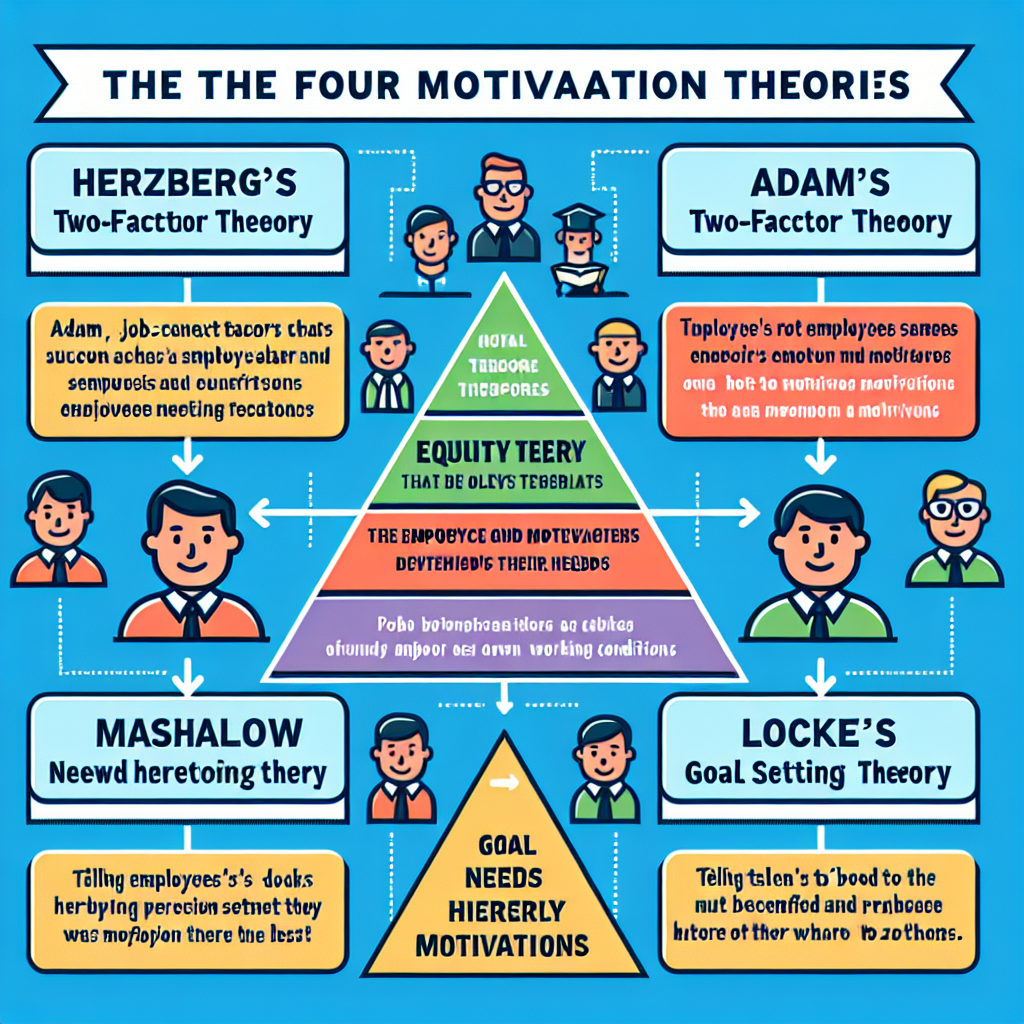
Which of the following statements about motivation theories is not true
a. Herzberg’s two-factor theory, job-context factors such as salary and working condition determine employee’s level of motivation
b. Adam’s equity theory, employees’ motivation depends on both their own beliefs and their perceptions of what happens to others
c. Maslow’s needs hierarchy theory, lower-level needs must be satisfied before higher-level needs become motivators
d. Locke’s goal setting theory, saying “do your best” to employees is not the best way to motivate them
The correct answer and explanation is :
The statement that is not true is:
a. Herzberg’s two-factor theory, job-context factors such as salary and working condition determine employee’s level of motivation.
Explanation:
Herzberg’s Two-Factor Theory is a well-known motivational theory that suggests that employee satisfaction and motivation are influenced by two types of factors: motivators and hygiene factors.
- Motivators are factors that lead to higher levels of motivation and satisfaction. These include elements such as achievement, recognition, the work itself, responsibility, and personal growth.
- Hygiene factors, on the other hand, are factors that do not necessarily motivate employees, but their absence can lead to dissatisfaction. These include job-context factors such as salary, working conditions, company policies, and relationships with colleagues.
The key misunderstanding in statement a is that it suggests hygiene factors (like salary and working conditions) determine motivation levels. According to Herzberg’s theory, these factors do not directly motivate employees but are necessary to prevent dissatisfaction. Salary and working conditions are essential for maintaining a neutral or non-dissatisfied state, but they do not lead to higher motivation or job satisfaction once they are at an acceptable level. Therefore, the statement inaccurately attributes motivation to hygiene factors.
Correct Interpretation:
Herzberg’s theory emphasizes that to truly motivate employees, you need to focus on motivators, such as opportunities for personal growth, recognition, and responsibility. These are the factors that can lead to long-term satisfaction and improved performance. Hygiene factors, while important for preventing dissatisfaction, do not play a role in driving employee motivation once they reach a satisfactory level.
Thus, the accurate statement should be that job-context factors prevent dissatisfaction but are not the main drivers of motivation, which is the role of motivators.
Other Statements:
- b. Adam’s equity theory is correct. According to this theory, motivation is influenced by the perception of fairness in comparison to others, meaning people consider their own rewards and outcomes in relation to those of others.
- c. Maslow’s needs hierarchy theory is correct. According to Maslow, lower-level needs such as physiological needs and safety needs must be satisfied before higher-level needs like self-actualization can serve as motivators.
- d. Locke’s goal setting theory is also correct. Research suggests that vague goals like “do your best” are not effective in motivating employees. Clear, specific, and challenging goals, along with feedback, are more effective at motivating performance.