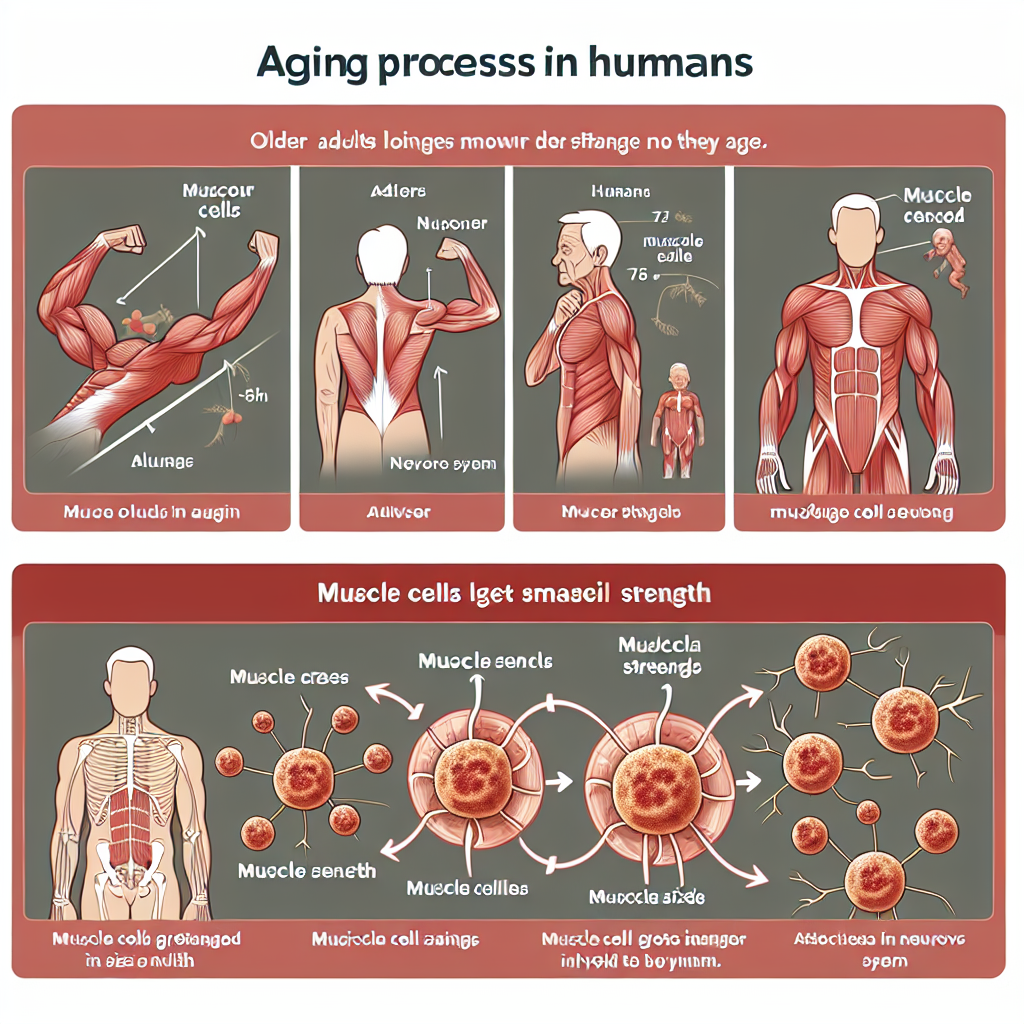
Older adults tend to lose muscular strength because muscle cells
A get larger in size.
B attach to the nervous system
C increase in number.
D get smaller in size.
The correct answer and explanation is :
Correct Answer: D) get smaller in size.
Explanation (300 words):
As adults age, a common physiological change they experience is a loss of muscular strength, largely due to a condition called sarcopenia. Sarcopenia is the age-related loss of skeletal muscle mass and function, and one of the key factors behind this is that muscle cells (also called muscle fibers) get smaller in size — not necessarily fewer in number at first, but smaller and weaker.
This process begins as early as the 30s and accelerates with advancing age, particularly after the age of 60. Muscle atrophy — the shrinking of muscle fibers — is primarily responsible for the decline in strength. This is especially true for fast-twitch fibers, which are responsible for quick, powerful movements. These fibers are more prone to shrinking and dying off than slow-twitch fibers.
Aging also leads to a decline in physical activity, particularly resistance or strength-based activities, which exacerbates muscle shrinkage. When muscles are not regularly stimulated, they lose their size and strength — a concept known as “use it or lose it.”
Additionally, the aging nervous system contributes to the problem. As motor neurons (nerve cells that connect to muscle fibers) die off with age, fewer muscle fibers are activated, and the remaining ones become less efficient. While muscle fibers can be “re-innervated” by surviving nerves, this process is not perfect and cannot completely prevent muscle loss.
Hormonal changes, such as decreases in testosterone, growth hormone, and insulin-like growth factor-1 (IGF-1), also reduce muscle protein synthesis, making it harder to maintain or grow muscle tissue.
Therefore, the correct answer is D) get smaller in size, as the loss of muscle strength in older adults is primarily due to the shrinking (atrophy) of muscle fibers, rather than an increase in number, attachment to the nervous system, or growth in size.