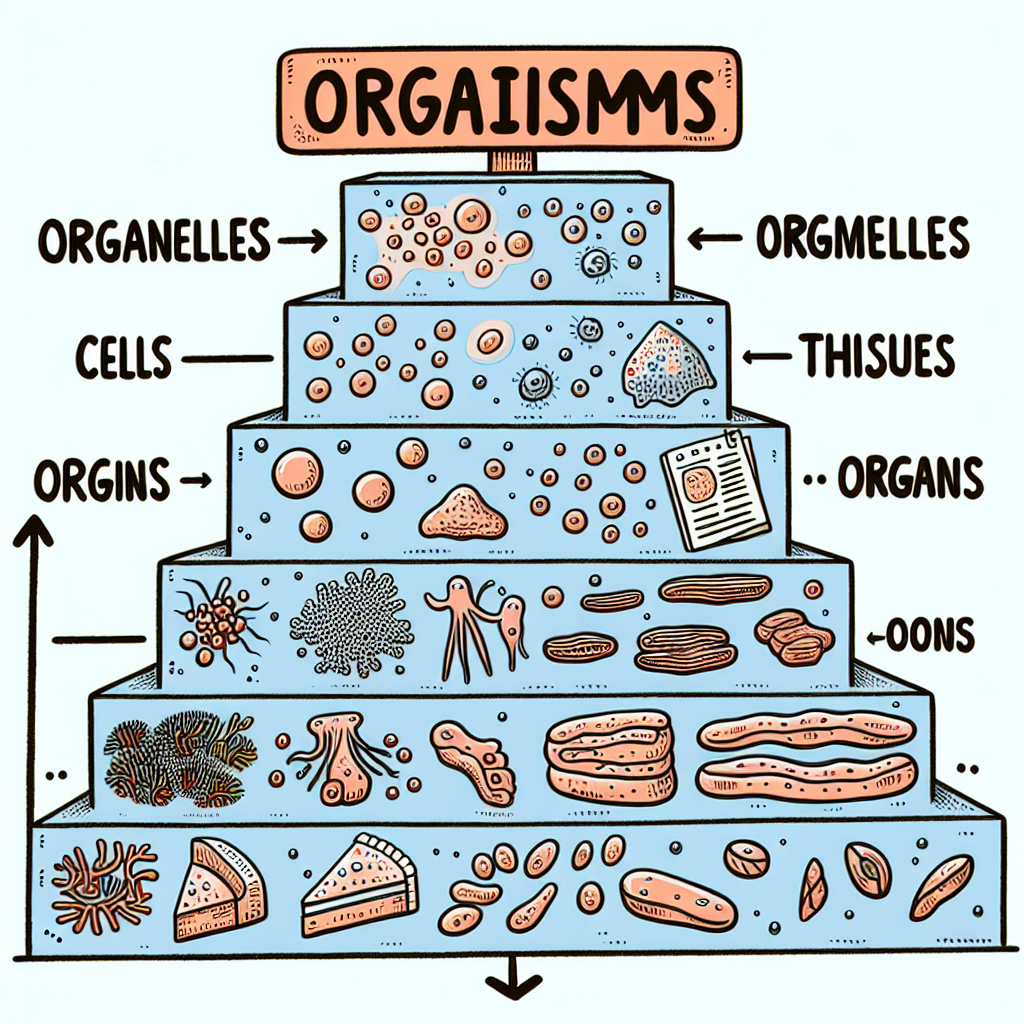
Which of the following is the largest level of organization?
organelles
organs
tissues
cells
organisms
The correct answer and explanation is :
Correct Answer: Organisms
Explanation (300 Words):
Biological organization is structured in a hierarchical system where each level builds upon the previous one, increasing in complexity. The correct order from the smallest to the largest level of organization is:
Organelles → Cells → Tissues → Organs → Organisms
Let’s break down each level:
- Organelles are the tiny structures inside cells that perform specific functions. Examples include the nucleus (which controls cell activities), mitochondria (which produce energy), and ribosomes (which synthesize proteins). Organelles are not alive on their own—they function as part of a cell.
- Cells are the basic units of life. Every living thing is made up of one or more cells. Some organisms, like bacteria, are unicellular (made of one cell), while others, like humans, are multicellular (made of many cells). Cells contain organelles and carry out all life processes.
- Tissues are groups of similar cells that work together to perform a specific function. For example, muscle tissue is made of muscle cells that contract to produce movement, while nervous tissue conducts electrical signals in the body.
- Organs are structures composed of two or more different types of tissues that work together to perform a particular function. The heart, for example, contains muscle tissue, connective tissue, and nervous tissue—all working together to pump blood.
- Organisms are the complete living beings. They can be as simple as a single-celled bacterium or as complex as a human being. An organism consists of multiple organ systems that function together to maintain life.
Therefore, “organisms” represent the largest and most complex level of organization in this list, as they encompass all the previous levels and function as a whole living being capable of reproduction, growth, and response to the environment.