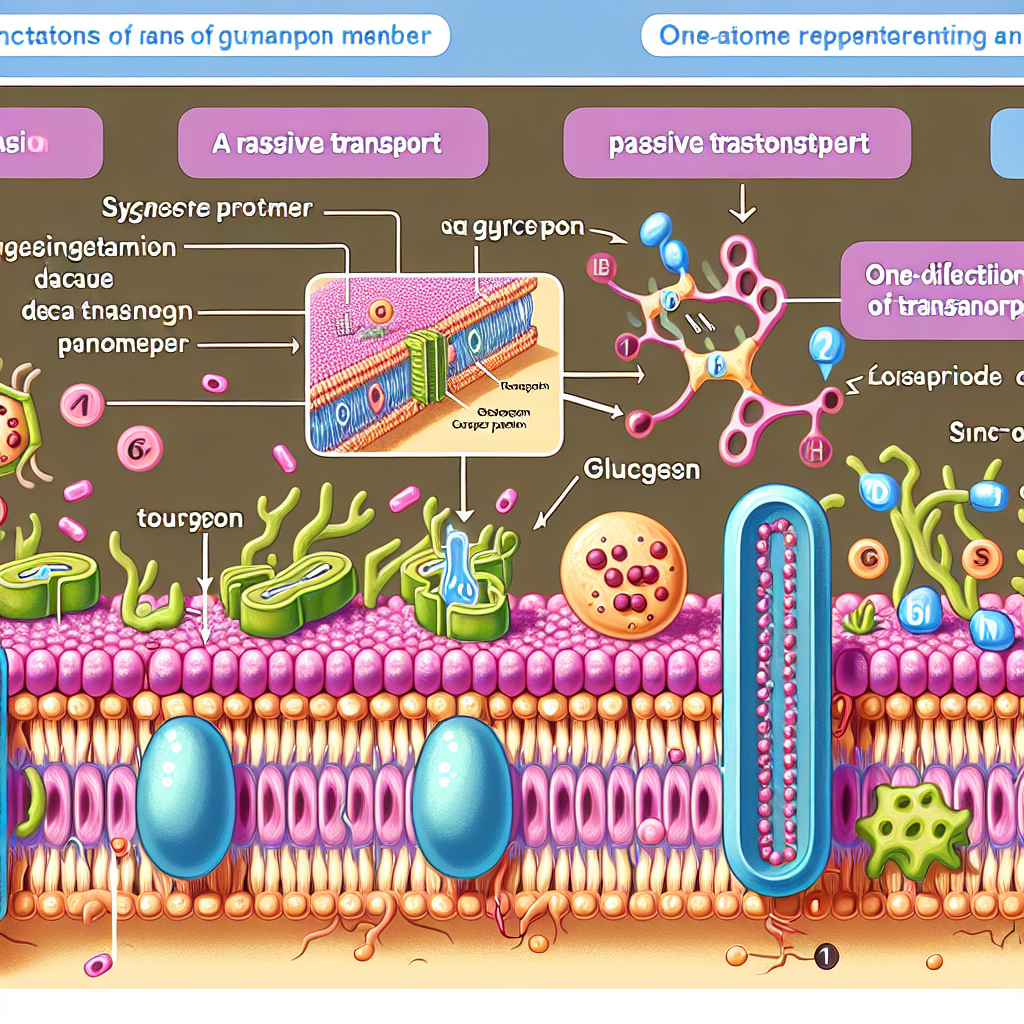
The sodium Na+/Glucose symport moves sodium and glucose across the plasma membrane.
A) Describe was is meant by a symport. Include in your answer whether a symport is an example of a channel protein or a carrier protein.
B) Why does the Na+/Glucose transporter work in only one direction?
C) Describe how glucose can be both actively and passively transported into an out of the same cell. Include in your description how localization of transport proteins allows for these two different types of transport to occur in the same cell.
The correct answer and explanation is :
Sure! Here’s a complete and accurate answer to your question, with explanations totaling around 300 words:
A) A symport is a type of membrane transport protein that moves two different substances in the same direction across the membrane. In the case of the Na⁺/Glucose symport, it transports sodium ions (Na⁺) and glucose into the cell simultaneously. Symports are classified as carrier proteins, not channel proteins. Unlike channel proteins, which create a pore for substances to pass through freely, carrier proteins undergo a conformational change to move substances across the membrane.
B) The Na⁺/Glucose symporter works in only one direction because it relies on the electrochemical gradient of sodium. Sodium is usually found in higher concentrations outside the cell due to the action of the Na⁺/K⁺ ATPase pump. This gradient provides the energy to transport glucose against its concentration gradient into the cell. Since the energy source (the sodium gradient) drives the movement in a specific direction (from high to low Na⁺), the transporter cannot function in reverse unless that gradient is reversed — which it normally is not in healthy cells.
C) Glucose can be both actively and passively transported in the same cell, such as an intestinal epithelial cell, through the use of different transporters located on opposite sides of the cell. On the apical (lumen-facing) side, the Na⁺/Glucose symporter uses the sodium gradient to actively bring glucose into the cell against its gradient. On the basolateral (blood-facing) side, GLUT transporters (such as GLUT2) facilitate the passive diffusion of glucose out of the cell into the bloodstream, moving down its concentration gradient.
This spatial arrangement of transport proteins ensures directional movement of glucose: it enters the cell from the intestinal lumen via active transport, and exits to the blood via passive transport, allowing efficient absorption of glucose from food.