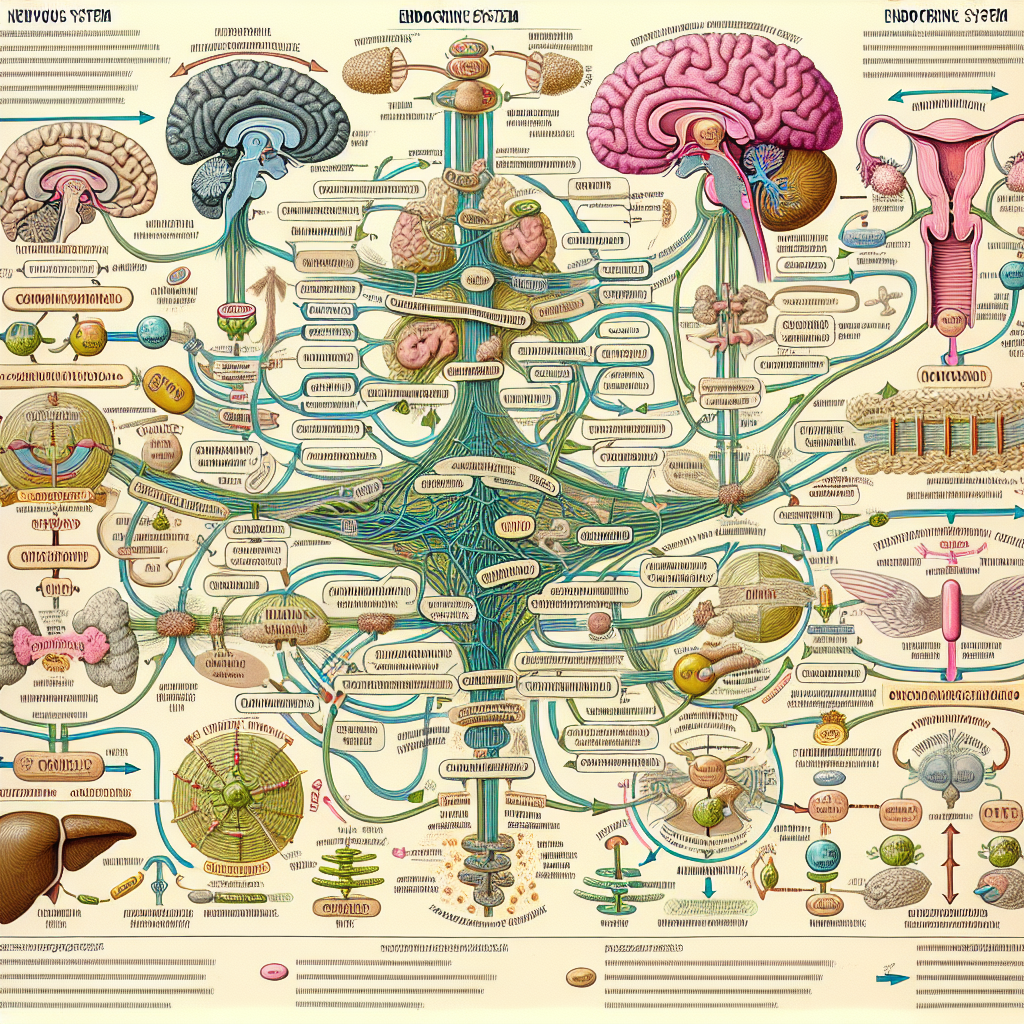
How does the nervous system and endocrine system work together to maintain homeostasis? Please explain all the hormones and how they interrelate and explain the answer fully
The correct answer and explanation is :
The nervous system and endocrine system work together to maintain homeostasis, which is the body’s internal stability despite changes in the external environment. This collaboration is essential because both systems control and regulate bodily functions, though in different ways.
Nervous System and Homeostasis:
The nervous system maintains homeostasis through rapid signaling using electrical impulses. Neurons transmit signals across synapses to other neurons, muscles, or glands. It primarily controls short-term, rapid responses, like adjusting heart rate, breathing rate, or reflex responses. For instance, if the body’s temperature rises, the nervous system triggers cooling mechanisms like sweating and vasodilation through signals to the hypothalamus.
Endocrine System and Homeostasis:
The endocrine system, on the other hand, operates more slowly and uses hormones to regulate processes over a longer period. Hormones are secreted into the bloodstream by endocrine glands like the thyroid, adrenal glands, and pancreas. These hormones act as chemical messengers that affect various organs and tissues, regulating metabolism, growth, and reproductive functions, among others.
Hormonal Interactions:
- Hypothalamus: This is the key regulator linking the nervous and endocrine systems. It senses internal conditions and sends electrical signals to the pituitary gland. It also secretes releasing or inhibiting hormones that control the release of hormones from the pituitary.
- Pituitary Gland: Known as the “master gland,” it secretes hormones that control other endocrine glands. It releases:
- Thyroid-stimulating hormone (TSH): Stimulates the thyroid to release thyroid hormones that regulate metabolism.
- Adrenocorticotropic hormone (ACTH): Stimulates the adrenal glands to release cortisol, helping manage stress and inflammation.
- Thyroid: It releases thyroxine (T4) and triiodothyronine (T3), which increase metabolic rate, impacting processes like energy production and temperature regulation.
- Adrenal Glands: Secrete adrenaline and cortisol. Adrenaline triggers the “fight-or-flight” response, while cortisol regulates the body’s response to stress and helps maintain glucose levels.
- Pancreas: Regulates blood sugar levels with insulin (lowers blood sugar) and glucagon (raises blood sugar).
Interrelation:
Both systems are constantly in communication, particularly via the hypothalamus, to ensure that the body maintains homeostasis. For example, during stress, the nervous system signals the hypothalamus, which then stimulates the adrenal glands via ACTH release, resulting in the release of cortisol and adrenaline. Together, these systems fine-tune processes like metabolism, stress responses, and energy balance to keep the body stable.