What happens during metaphase II of meiosis?
Homologous chromosomes form, and crossing over occurs between them.
The nuclear membrane begins to form around haploid sets of chromosomes.
Homologous chromosomes separate, but sister chromatids remain joined at their centromeres.
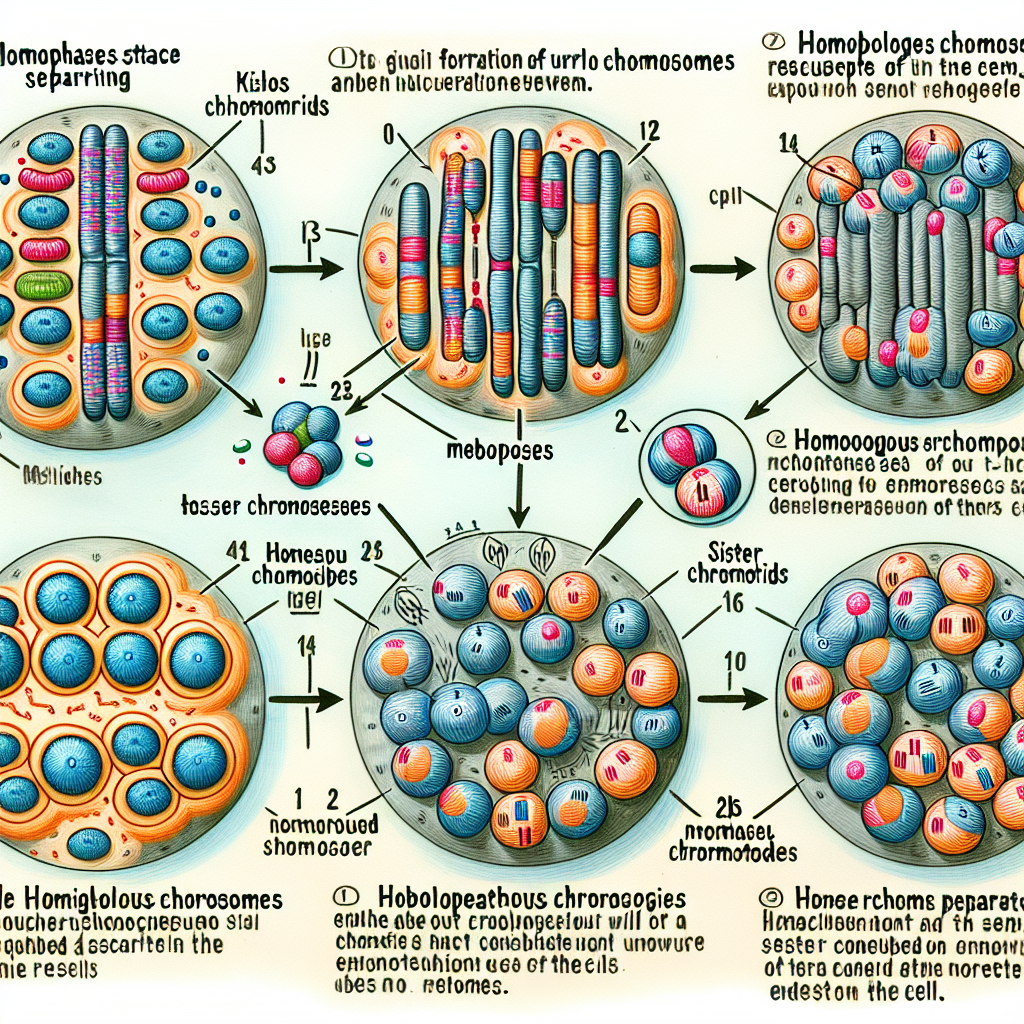
Sister chromatids are distributed in a single layer across the center of the cell.
Homologous chromosomes are randomly arranged in the middle of the cell.
Sister chromatids separate from each other and migrate to opposite ends of the cell.
The correct answer and explanation is :
Correct Answer:
Sister chromatids are distributed in a single layer across the center of the cell.
Explanation (300 words):
Meiosis is a specialized type of cell division that reduces the chromosome number by half, resulting in four haploid cells, each genetically distinct from the parent cell. Meiosis occurs in two successive stages: meiosis I and meiosis II. Metaphase II is a stage within meiosis II, and it is crucial for the accurate separation of sister chromatids.
During metaphase II, the key event is the alignment of sister chromatids at the metaphase plate, which is the central plane of the cell. Unlike metaphase I—where homologous chromosomes pair and line up—metaphase II involves single chromosomes (each made up of two sister chromatids) lining up in a single layer along the metaphase plate. These sister chromatids are held together at the centromere and are ready to be separated.
Importantly, no pairing of homologous chromosomes or crossing over occurs at this stage, as those processes already took place in meiosis I. The spindle fibers from opposite poles attach to the kinetochores of each chromatid, preparing for the next stage: anaphase II, where the sister chromatids will finally separate and move to opposite poles.
The proper alignment during metaphase II ensures that each daughter cell will receive an equal and correct set of chromosomes. Errors in this stage can lead to nondisjunction, where chromatids fail to separate properly, potentially resulting in genetic disorders such as Down syndrome if it occurs during gamete formation.
In summary, metaphase II is defined by the single-file alignment of sister chromatids at the cell’s equator. This sets the stage for their eventual separation and the formation of four genetically unique haploid cells at the end of meiosis.