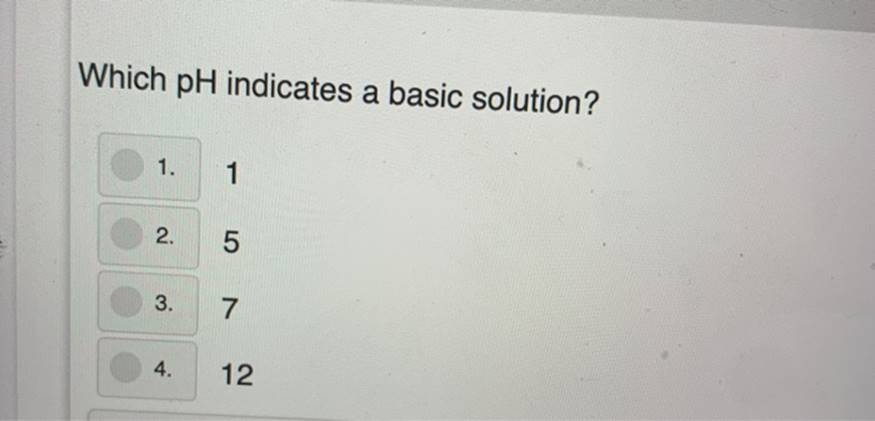
Which PH Indicates A Basic Solution? 1. 1 2. 5 3. 7. 4. 12
The Correct Answer and Explanation is:
The correct answer is: 4. 12
Explanation:
The pH scale is a measurement of how acidic or basic (alkaline) a solution is. It ranges from 0 to 14 and is a logarithmic scale, meaning each whole number change represents a tenfold difference in hydrogen ion concentration.
- Acidic solutions have a pH less than 7.
- A neutral solution has a pH equal to 7 (pure water is a common example).
- Basic (alkaline) solutions have a pH greater than 7.
Let’s briefly evaluate each option:
- pH 1 – This is highly acidic. It corresponds to substances like stomach acid or battery acid.
- pH 5 – This is mildly acidic, similar to black coffee or rainwater.
- pH 7 – This is neutral, like distilled water.
- pH 12 – This is strongly basic. It’s the correct answer. Common examples of solutions with a pH of 12 include soapy water and bleach.
Why is pH 12 Basic?
A basic solution has more hydroxide ions (OH⁻) than hydrogen ions (H⁺). When the concentration of hydrogen ions decreases, the pH increases above 7. A pH of 12 indicates a very low concentration of H⁺ ions and a high concentration of OH⁻ ions, typical of substances like household ammonia or cleaning agents.
The pH scale is crucial in chemistry, biology, environmental science, and medicine. For instance, our blood must maintain a slightly basic pH of about 7.35–7.45. Deviations from this range can be dangerous.
In conclusion, among the given options, pH 12 is the only value that indicates a basic solution, making it the correct choice.