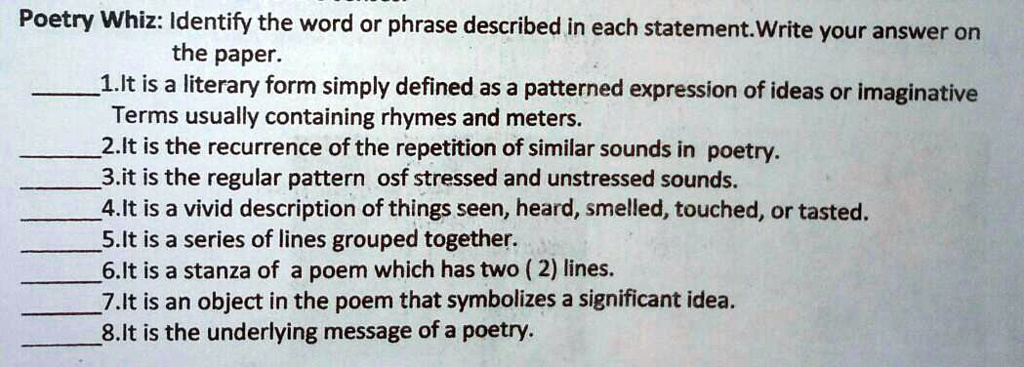
It is a literary form simply defined as a patterned expression of ideas or imaginative terms usually containing rhymes and meters. 2. It is the recurrence of similar sounds in poetry. 3. It is the regular pattern of stressed and unstressed sounds. 4. It is a vivid description of things seen, heard, smelled, touched, or tasted. 5. It is a series of lines grouped together. 6. It is a stanza of a poem which has two (2) lines. 7. It is an object in the poem that symbolizes a significant idea. 8. It is the underlying message of a poem
The Correct Answer and Explanation is:
Answers:
- Poetry
- Rhyme
- Meter
- Imagery
- Stanza
- Couplet
- Symbol
- Theme
Explanation
Poetry is a literary form that uses carefully chosen words for their meaning, sound, and rhythm to express ideas and emotions in imaginative and powerful ways. It is often characterized by rhyme and meter, which provide structure and musicality. In poetry, rhyme refers to the repetition of similar sounds, especially at the ends of lines, which adds to the aesthetic and mnemonic quality of the poem.
Meter is the measured arrangement of syllables in poetry, particularly the pattern of stressed and unstressed syllables. It helps create rhythm and gives poetry a musical flow. Alongside meter, imagery plays a crucial role by engaging the reader’s senses—sight, sound, smell, touch, and taste—allowing them to vividly experience the poem’s subject.
A stanza is a grouped set of lines in a poem, similar to a paragraph in prose, which organizes ideas and creates rhythm. A specific type of stanza is a couplet, which contains two lines that often rhyme and express a complete thought.
Poets often use symbols—objects, figures, or colors—to signify abstract ideas or concepts. For example, a rose might symbolize love, while darkness might symbolize fear or death. This use of symbolism adds depth to poetry and encourages multiple interpretations.
Lastly, the theme is the central idea or underlying message the poet wishes to convey. It could be a reflection on love, war, nature, identity, or any other profound human experience. Understanding the theme helps readers grasp the overall meaning and emotional impact of the poem.
Each of these elements contributes to how poetry communicates powerful messages in concise and evocative ways.