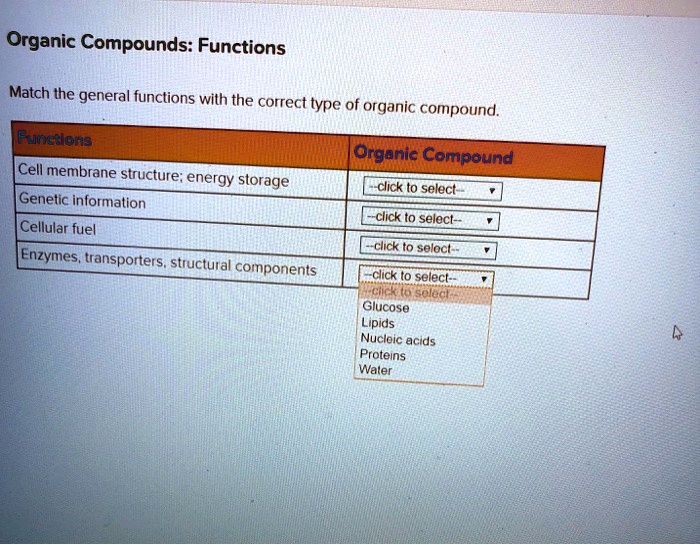
Organic Compounds: Functions Match the general functions with the correct type of organic compound. Functions Organic Compound Cell membrane structure; energy storage –click to select– ? Genetic information –click to select– ? Cellular fuel –click to select– ? Enzymes, transporters, structural components –click to select– ? –click to select– Glucose Lipids Nucleic acids Proteins Water
The Correct Answer and Explanation is:
Here are the correct matches for the functions of organic compounds:
- Cell membrane structure; energy storage: Lipids
- Genetic information: Nucleic acids
- Cellular fuel: Glucose
- Enzymes, transporters, structural components: Proteins
Explanation
The four major classes of organic compounds, or macromolecules, are essential for life, each performing distinct and critical roles within an organism.
Lipids are correctly matched with the functions of providing cell membrane structure and long-term energy storage. The fundamental structure of all cell membranes is the phospholipid bilayer, a barrier made of lipid molecules that controls what enters and exits the cell. Furthermore, lipids, in the form of fats and oils (triglycerides), are the body’s most efficient way to store energy for later use. They contain more energy per gram than any other macromolecule, making them a vital energy reserve.
Nucleic acids, which include DNA (deoxyribonucleic acid) and RNA (ribonucleic acid), are the molecules responsible for storing and transmitting genetic information. DNA contains the hereditary blueprint, the complete set of instructions for building and maintaining an organism. RNA helps to carry out these instructions by translating the genetic code into proteins. Therefore, their primary function is managing the cell’s genetic information.
Glucose is the correct match for cellular fuel. Glucose is a simple sugar, a type of carbohydrate, and it is the main source of immediate energy for most living cells. Through the process of cellular respiration, cells break down glucose to produce ATP (adenosine triphosphate), the molecule that powers nearly all cellular activities. While other molecules can be used for energy, glucose is the primary and most readily available fuel.
Proteins are the most versatile of the macromolecules, which is why they are matched with the diverse functions of acting as enzymes, transporters, and structural components. As enzymes, proteins catalyze biochemical reactions. As transporters, they move substances across cell membranes or throughout the body, like hemoglobin transporting oxygen. As structural components, proteins like collagen and keratin provide support, shape, and strength to cells and tissues.