The Correct Answer and Explanation is:
Of course. Based on the principles of human vision in the context of driving, here are the correct matches.
Correct Answer
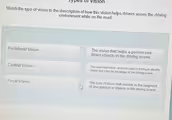
- Peripheral Vision matches with: The type of vision that assists in the judgment of the position of objects in the driving scene.
- Central Vision matches with: The vision that allows a user to identify details, color, and size in the edges of the driving scene.
- Focal Vision matches with: The vision that helps a person see direct objects in the driving scene.
Explanation
Human sight is a complex system, and for a dynamic activity like driving, we rely on different types of vision working together to create a complete picture of our surroundings.
Focal Vision is the most direct and highly concentrated part of our sight, covering a very small 3 to 5 degree cone in the center of our visual field. This is the vision you use to look at something specific and get a clear, detailed image. It correctly matches with the description of seeing “direct objects” because when you intentionally look at a stop sign, a specific car ahead, or the speedometer, you are using your focal vision to gather precise information about that single object.
Central Vision is a slightly wider area surrounding your focal vision, extending out to about 30 degrees. It is still sharp and clear, allowing you to process details and color effectively. This is why it correctly matches with the description of identifying “details, color, and size.” While focal vision targets one object, central vision provides the broader context around it. For instance, it allows you to read a road sign while also being aware of the traffic light next to it and the shape of the intersection. It gives meaning and detail to the primary area you are looking at.
Peripheral Vision, or side vision, encompasses the rest of your visual field, which can be up to 180 degrees or more. This vision is not clear or detailed; in fact, objects in your periphery appear blurry. However, it is extremely sensitive to motion and changes in light. Its crucial role is to provide a sense of your surroundings and your position relative to other objects. This is why it correctly matches with assisting in the “judgment of the position of objects.” It alerts you to a car entering your lane from the side or a pedestrian stepping off the curb, prompting you to turn your head and use your central and focal vision to identify the potential hazard.
