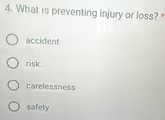
The Correct Answer and Explanation is:
The correct answer is safety.
Safety is the concept that directly addresses the prevention of injury or loss. It is defined as the state of being protected from danger, harm, or risk. More than just a passive condition, safety is an active and continuous process involving the identification of hazards and the implementation of controls to mitigate them. These controls can be physical, like installing guardrails, or procedural, such as following a specific protocol for operating machinery. The core purpose of all safety measures, from wearing a seatbelt to following food handling guidelines, is to proactively stop negative events from happening. It is a deliberate effort to create a secure environment where people are protected.
The other options describe different aspects of the problem, not the solution. An accident is the undesirable event itself, the very outcome that safety practices are designed to prevent. It is the result of a failure in safety. Risk is the probability or potential for an accident to occur. Safety management is the discipline of analyzing and reducing risk to an acceptable level. Therefore, risk is what safety acts upon. Carelessness is a human factor that significantly increases risk. It is a failure to exercise caution and is a common cause of accidents. It represents a disregard for safety principles.
In essence, carelessness can increase risk, which may lead to an accident. Safety stands in direct opposition to this chain of events. It is the comprehensive set of actions, systems, and mindsets dedicated to breaking that chain by preventing injury and loss before they can happen.