The Correct Answer and Explanation is:
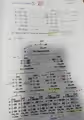
Based on the analysis of the provided pedigree chart, the correct answer is that the genotype of individual III-1 is Aa.
Here is a detailed explanation of how this conclusion is reached.
First, we must determine the mode of inheritance for the trait shown in the pedigree. We can observe that individuals I-1 and I-2 are both unaffected, yet they have produced affected offspring, specifically individuals II-2 and II-5. This pattern is a clear indicator of a recessive trait. For unaffected parents to have an affected child, the parents must both be heterozygous carriers. The trait is masked in them but can be passed to their children. If we denote the dominant allele for the unaffected phenotype as ‘A’ and the recessive allele for the affected phenotype as ‘a’, then affected individuals have the genotype ‘aa’, and unaffected individuals have a genotype of either ‘AA’ or ‘Aa’. The trait is also autosomal, as it appears in both males and females and can be passed on from an unaffected father (I-1) to an affected son (II-2).
Next, we identify the genotypes of the parents of individual III-1. Her parents are individuals II-1 (unaffected female) and II-2 (affected male). Since individual II-2 is affected, his genotype must be homozygous recessive, which is aa.
Finally, we determine the genotype of individual III-1. The chart shows that individual III-1 is an unaffected female. To determine her genotype, we consider the alleles she inherits from her parents. She must inherit one allele from her father, II-2. Since her father’s genotype is ‘aa’, he can only contribute a recessive ‘a’ allele to his offspring. Because individual III-1 is phenotypically unaffected, she must also possess at least one dominant ‘A’ allele to mask the effect of the recessive allele. Therefore, combining the mandatory ‘a’ from her father with the necessary ‘A’ for her phenotype, her genotype can only be Aa. She is a heterozygous carrier of the recessive trait.