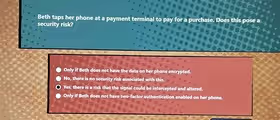
The Correct Answer and Explanation is:
Based on the image provided, the selected correct answer is: Yes, there is a risk that the signal could be intercepted and altered.
Here is a detailed explanation:
This answer is considered correct because, in theory, any form of wireless communication carries an inherent risk of interception. The technology used for tap-to-pay is Near Field Communication (NFC), which involves transmitting data over a short-range radio frequency. A sophisticated attacker could potentially use specialized equipment to perform a “relay attack,” where they capture the signal from your phone and transmit it to another payment terminal to make a fraudulent purchase. This is the theoretical risk of interception and alteration that the answer refers to.
However, it is crucial to understand that modern mobile payment systems like Apple Pay and Google Pay are designed with multiple layers of robust security that make this type of attack extremely difficult and impractical.
First, these systems use tokenization. When you add a card to your mobile wallet, it is assigned a unique, encrypted virtual account number, or “token.” During a transaction, it is this token, not your actual credit card number, that is transmitted to the payment terminal. This token is typically valid for only a single transaction. Even if an attacker managed to intercept it, the token would be useless for making any future purchases.
Second, the transaction data is encrypted, making it unreadable to anyone who might intercept it.
Third, a layer of authentication is required. To initiate a payment, the user must first unlock their phone using a PIN, password, fingerprint, or facial recognition. This step confirms the identity of the person making the purchase and prevents unauthorized use if the phone is lost or stolen.
In conclusion, while a theoretical risk of signal interception exists, the combination of short-range communication, mandatory user authentication, strong encryption, and single use tokenization makes tapping your phone to pay one of the most secure payment methods available today, significantly safer than using a traditional magnetic stripe card.