The Correct Answer and Explanation is:
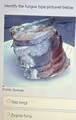
Based on the image provided, the condition shown is equine pythiosis, which is caused by an organism classified as a water mold or oomycete. Since “Oomycete” is a standard option in biology for this type of organism, it is the most accurate answer.
Explanation:
The image displays a severe infection on a horse’s hoof, a condition known as pythiosis, or colloquially as “swamp cancer.” This disease is caused by the aquatic organism Pythium insidiosum. While the question asks to identify a “fungus type,” this is a common point of confusion. Pythium insidiosum is not a true fungus; it is an oomycete, or water mold. Oomycetes are fungus like protists that were historically classified with fungi due to their similar filamentous growth and nutrient absorption methods. However, they are now placed in the Kingdom Stramenopila, which also includes diatoms and brown algae.
There are fundamental biological differences between oomycetes and true fungi. The cell walls of true fungi are primarily composed of chitin, whereas the cell walls of oomycetes, including Pythium, are made of cellulose and glucans. Furthermore, the vegetative hyphae of true fungi typically contain haploid nuclei, while oomycetes have diploid nuclei.
The infection occurs when a wound on an animal comes into contact with water containing the motile zoospores of Pythium insidiosum. These spores invade the tissue, causing a severe, progressive, and often fatal infection characterized by the development of large, granulomatous lesions. These lesions, as seen in the picture, are often reddish, ulcerated, and contain hard, yellowish, necrotic masses called “kunkers.” The condition is notoriously difficult to treat because the organism does not respond well to traditional antifungal medications, a result of its distinct cellular biology. Therefore, the most precise identification for the causative agent is oomycete.