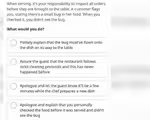
The Correct Answer and Explanation is:
The correct answer is: Apologize and let the guest know it’ll be a few minutes while the chef prepares a new dish.
This is the most effective response because it directly addresses the customer’s problem with a solution-oriented approach, which is the cornerstone of excellent customer service. The primary goal in this situation is to acknowledge the mistake, validate the guest’s negative experience, and immediately take action to correct it.
An immediate and sincere apology is crucial. It shows respect for the customer and acknowledges the severity of the issue without getting defensive. Following the apology with a clear, direct action, such as preparing a new dish, demonstrates accountability and a commitment to making things right. This response focuses entirely on the guest’s needs and resolving their problem swiftly, which helps to de-escalate the situation and begin rebuilding their trust in the establishment.
The other options are incorrect because they fail to prioritize the customer’s experience. Explaining that the bug must have flown in on the way to the table sounds like an excuse and deflects responsibility. Assuring the guest about the restaurant’s cleaning protocols, while perhaps true, is defensive and dismisses the immediate problem at hand; the customer does not care about past cleanliness when there is a bug in their current meal. Similarly, explaining that you personally checked the dish and did not see the bug shifts the focus from the customer’s issue to defending your own actions. It can make the guest feel as though you are questioning their complaint. In a service failure, the best course of action is always to apologize sincerely, take ownership, and provide a prompt and satisfactory solution.