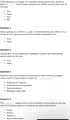
The Correct Answer and Explanation is:
Based on the image provided, the correct answer to Question 4 is:
D. Strategic action plan
Explanation
The term strategic action plan is the most accurate and comprehensive description for the process of developing long-range approaches to resolve significant safety, security, or disaster problems. This concept can be broken down to understand why it is the correct choice over the other options.
A strategic action plan is fundamentally about looking forward and creating a structured, comprehensive framework to achieve a major goal. The word “strategic” itself implies a long-term vision and a high-level approach, which directly aligns with the question’s phrase “developing long-range approaches.” It is not about a quick fix but about a sustained effort to address the root causes of complex problems.
The “action plan” component signifies that this is not merely a theoretical exercise. It involves defining specific, measurable steps, assigning responsibilities, setting timelines, and allocating resources to move from the current situation to a desired future state where the problem is resolved or managed. This addresses the “resolution of… problems” part of the question. Such a plan is versatile and can be applied to issues of “local or global interest,” from a community’s emergency preparedness plan to an international treaty on climate change security risks.
The other options are incorrect for the following reasons:
- A. Assessing the situation: This is a crucial first step within the development of a strategic plan, but it is not the entire process. Assessment involves gathering information and understanding the problem, while a strategic plan involves creating the long-term solution.
- B. International issues resolution: This term is too narrow. While a strategic plan can be used for international issues, the question explicitly includes problems of “local” interest, which this option excludes.
- C. Countermeasures: These are the specific actions or tools used to combat a threat. Countermeasures, such as building seawalls or installing surveillance systems, would be individual components of a strategic action plan, not the overarching plan itself.