The Correct Answer and Explanation is:
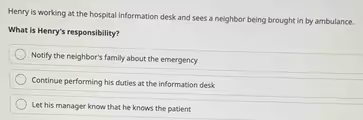
The correct answer is: Let his manager know that he knows the patient.
This scenario presents a classic ethical dilemma in a healthcare setting, revolving around patient confidentiality and professional responsibility. The most appropriate action for Henry is to inform his manager about his personal relationship with the patient. This choice is rooted in the principles of patient privacy, conflict of interest management, and professional ethics.
Notifying the neighbor’s family directly would be a significant breach of patient confidentiality. Laws like the Health Insurance Portability and Accountability Act (HIPAA) in the United States strictly regulate the disclosure of Protected Health Information (PHI). Henry’s role at the information desk does not grant him the authority to share information about a patient’s presence or condition, even if his intentions are helpful. Such a disclosure could have serious legal and professional consequences for both Henry and the hospital. The responsibility for family notification lies with authorized clinical or administrative personnel who follow established hospital protocols.
Simply continuing to perform his duties without mentioning the connection is also not ideal. This option ignores a potential conflict of interest. If friends or family of the neighbor call or approach the information desk for updates, Henry’s personal relationship could compromise his professional objectivity. He might unintentionally reveal information or be pressured into doing so. This creates a vulnerable situation that could lead to an inadvertent privacy breach.
By alerting his manager, Henry acts professionally and responsibly. He is not breaching the patient’s privacy; rather, he is reporting a potential conflict to his supervisor. This allows the management team to make an informed decision to mitigate any risks. The manager might decide to have another employee handle inquiries about this specific patient or simply remind Henry of his strict confidentiality obligations. This proactive step demonstrates integrity, protects the patient’s privacy, and safeguards the hospital from potential ethical and legal issues.