The Correct Answer and Explanation is:
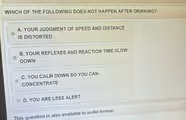
The correct answer is C. YOU CALM DOWN SO YOU CAN CONCENTRATE.
This statement is incorrect because while alcohol can have a sedative effect that may make a person feel calmer or more relaxed, it severely impairs the ability to concentrate. Alcohol is a central nervous system depressant, which means it slows down brain function and the communication pathways between nerve cells. This directly hinders cognitive processes, including focus, attention, and clear thinking. Instead of enhancing concentration, alcohol consumption leads to jumbled thoughts, a shortened attention span, and difficulty processing information. The feeling of calmness is a result of reduced inhibitions and sedation, not a state of heightened mental focus.
Let’s examine why the other options are true effects of drinking.
Option A, “Your judgment of speed and distance is distorted,” is a well-documented effect. Alcohol impairs the brain’s frontal lobe, which is responsible for reasoning and judgment. This makes it difficult to accurately assess how fast you or other vehicles are moving and to correctly perceive the distance to objects, a critical skill for safe driving.
Option B, “Your reflexes and reaction time slow down,” is also correct. As a depressant, alcohol slows the signals from your brain to your muscles. This increases the time it takes to respond to a sudden event, such as braking for a stoplight or swerving to avoid a hazard.
Finally, option D, “You are less alert,” is a direct consequence of alcohol’s sedative properties. It can cause drowsiness, reduce your awareness of your surroundings, and make you less responsive to sensory input, further contributing to the dangers of performing tasks that require attention, like operating machinery or driving.