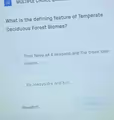
The Correct Answer and Explanation is:
Based on the visible text in the image, the correct answer is that the biome has four distinct seasons and its trees lose their leaves annually.
Explanation
The defining feature of a Temperate Deciduous Forest Biome is the seasonal shedding of leaves from its broadleaf trees. This characteristic is directly linked to the biome’s location in temperate zones, which are regions that experience four distinct seasons: spring, summer, autumn, and winter. The very name of the biome provides the clue. “Temperate” refers to its moderate climate with a distinct winter season, and “deciduous” is a term derived from Latin, meaning to fall off or fall down.
This annual cycle is a brilliant evolutionary adaptation. During the warm, wet spring and summer, the broad leaves of trees like oak, maple, and birch create a dense canopy, maximizing their ability to capture sunlight for photosynthesis. This is the primary growing season where the forest is lush and full of life.
As autumn approaches, the days shorten and temperatures drop. In response to these environmental cues, the trees begin to prepare for the dormant winter period. They stop producing chlorophyll, the green pigment essential for photosynthesis. As the chlorophyll breaks down, other pigments like carotenoids (yellows and oranges) that were always present in the leaves become visible, creating the spectacular autumn foliage these forests are famous for. The tree then forms a special layer of cells at the base of each leaf stem, effectively cutting off the leaf and causing it to fall.
This leaf loss is a crucial survival strategy. It helps the trees conserve water and energy during the cold, dry winter when water in the ground may be frozen and unavailable. Without leaves, the trees are less susceptible to damage from winter winds and heavy snow. This entire process, a direct result of the four season cycle, dictates the rhythm of the ecosystem. It influences everything from the rich, fertile soil created by decomposing leaf litter to the life cycles of the animals, many of which hibernate or migrate to survive the winter.