The Correct Answer and Explanation is:
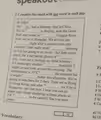
Of course. Here are the correct answers for the exercise, followed by a detailed explanation.
Correct Answers
- to
- in
- although
- because
- which
- but
- when
- so
- so
- for
- that
- if
- with
- to
Explanation
This exercise tests a range of fundamental English grammar words that connect ideas and provide context. The answers are chosen based on their grammatical function within the sentences of an informal email about travel.
The words can be grouped by their function:
Conjunctions and Linking Words: These words join clauses and show the relationship between them.
- although (3) and but (6) are used to show contrast. The Great Wall was amazing, in contrast to the nightmare journey. The writer expected heat, but in contrast, there were clouds.
- because (4) gives a reason. They arrived late for the reason that the journey was a nightmare.
- so (8) shows a result. It was cloudy, and as a result, they couldn’t see much.
- if (12) introduces a conditional clause. On the condition that the writer flies to the city, they hope the recipient can get time off.
Prepositions: These small words indicate relationships of time, place, or direction.
- to (1, 14) is used to show purpose (a message to say something) and in infinitive phrases (amazing to see you).
- in (2) is the correct preposition for arriving in a large place like a city or country.
- for (10) is used to express a duration of time (“for three days”).
- with (13) indicates accompaniment (do things with us).
Pronouns and Other Function Words:
- which (5) is a relative pronoun that refers to the entire preceding idea (“it started raining”), adding extra information about it.
- when (7) acts as a conjunction to link the “surprise” to the specific time it occurred: the day they visited the Forbidden City.
- that (11) is a pronoun that refers back to the previously mentioned plan (flying to Hong Kong).
- so (9) is used here as an intensifier to emphasize the adjective “empty,” conveying surprise. It is stronger and more informal than “very.”